
Red Sahawiq is the bright, fiery, everyday table sauce of Yemen. You'll find it spooned over rice, tucked into flatbreads, and served with slow-cooked meats, mandis and beans such as ful. It's raw, fresh, and unapologetically punchy. It is made in minutes from tomatoes, red chillies, garlic, coriander, lemon, salt, and cumin. There is a green version which is equally as delicious. Try that Zhoug recipe here.
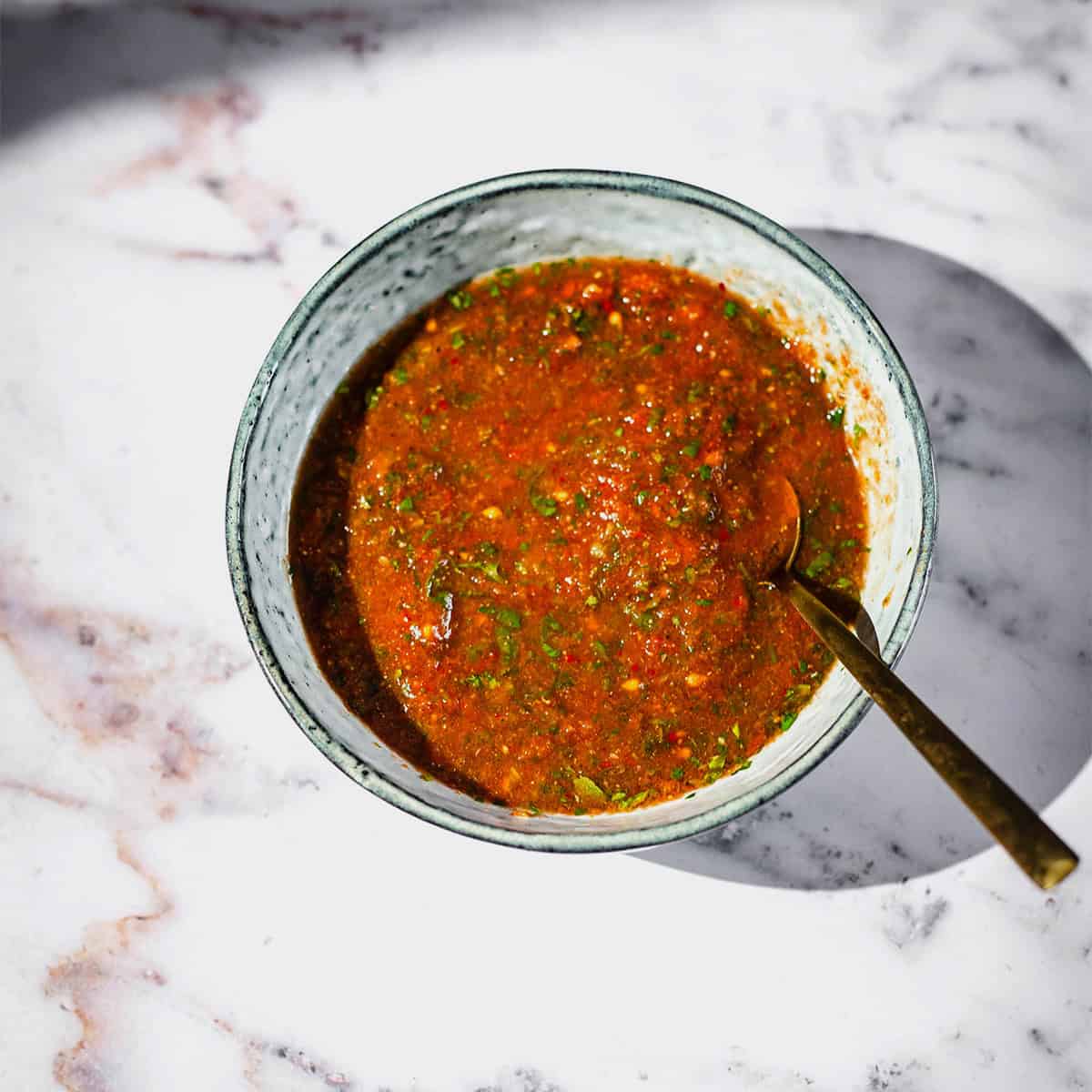
In many Yemeni homes, it is called bisbas. The word refers to chillies, and by extension to this fresh chilli-based salsa that appears at nearly every meal. Depending on the region and household, sahawiq and bisbas are used interchangeably.
Other names you may see for it include: zhug, skhug, sahawiq, mabooj, and bisbas. While zhug/skhug often refers to the greener, herb-forward version in neighbouring cuisines, the family resemblance is clear. Both are equally as delicious.
Note - This is coming from someone who doesn't actually enjoy salsa type condiments!
Jump to:
Why you'll love Red Sahawiq (Bisbas)
Sahawiq is all about adding a little something. The tomatoes bring juiciness, the chillies a clean heat, garlic a savoury backbone, coriander a green lift, and lemon a sharp edge that ties it together. Cumin grounds it with warmth. The result is a coarse, spoonable salsa that cuts through rich food and perks up the simplest meal.
It's naturally vegan, gluten-free, and made with ingredients you likely already have. And because it's uncooked, it tastes vivid and alive.
A little context and history
Across Yemen, sahawiq aka bisbas is as common as bread. It's served with saltah/fahsah (the national stew made of ground beef or lamb with fenugreek), alongside mandi and zurbian rice dishes, and with grilled meats, fish, and beans. Homes have their own ratios and textures. Some prefer it coarse and rustic, others smoother and spoon-pourable.
Traditionally, it's pounded in a mortar to release juices gradually. Nowadays, a quick blitz in a blender is common and perfectly acceptable, but the intention remains the same: fresh, sharp, and full of life.
Ingredients (and what each adds)
- Tomatoes - Juicy base and gentle sweetness. Use ripe, firm tomatoes for the best flavour without excess water.
- Red chillies - Clean, bright heat. Adjust to taste.
- Garlic - Savoury depth and bite.
- Fresh coriander (a handful) - Herbal freshness and aroma.
- Lemon juice (a squeeze) - Sharpness that lifts and preserves.
- Salt (to taste)- Brings everything into focus.
- Cumin powder - Earthy warmth that makes it unmistakably Yemeni.
How to make Red Sahawiq (Bisbas)
Roughly chop the tomatoes if they are large, chillies, garlic, and coriander.
Add everything to a blender or food processor with the lemon juice, salt, and cumin.

Pulse to a coarse salsa. Avoid over-blending. You want texture, not a purée.
Taste and adjust salt, lemon, or chilli.
Rest for 5-10 minutes before serving to let the flavours settle.
Traditionally, you'd pound the garlic, salt, and cumin first, then work in the chillies, coriander, and tomatoes for a more rustic texture.


Tips and tricks
- Remove chilli seeds for a milder sahawiq, or add an extra chilli if you like it hot.
- Pulse, scrape down, and stop early to prevent a watery texture.
- Roma/plum tomatoes are ideal as they're less watery.
- A short rest deepens the flavour as the salt draws out juices.
- Finely chopping by hand gives excellent texture if you don't want to blend.
Variations
- Smoky sahawiq: Char the tomatoes and chillies briefly over a flame before blending.
- Green-herb twist: Add extra coriander and a little parsley for a greener note.
- With olive oil: A tablespoon stirred in at the end gives a silkier finish (not traditional, but lovely).
- Extra spice: A pinch of ground black pepper or cardamom for warmth.
Storage
Red Sahawiq is best eaten fresh but keeps well:
- Store in an airtight jar in the fridge for up to 3 days.
- Stir before using as natural separation may occur.
- If it waters out, simply stir it back in or drain a little liquid.
- Not suitable for freezing-the tomatoes lose their texture.
How to serve
Spoon it over rice, grilled chicken, lamb, or fish. Serve with flatbread and hummus or beans. Add to wraps and sandwiches. Or do as Yemenis do: put it on the table and let everyone help themselves.
More Yemeni Recipes:
Lamb Zurbian - Yemeni Biryani with Lamb and Potatoes
Yemeni Lahsa - Creamy Cheesy Eggs
Zhug (Zhoug) Recipe - Authentic Yemeni Green Chili Sauce
Rate and Leave a Comment
Did you make this recipe? i'd love to hear about it! did you try any variations? if you loved this recipe/tried any variations/have some top tips, please leace a star rating and comment below. Your reviews make our day and your tips help others to find our recipes and enjoy them too! you can also follow us on instagram and subscribe to our newsletter to get our latest recipes.
📖 Recipe
Red Sahawiq (Bisbas) -Yemeni Fresh Chilli & Tomato Salsa
Ingredients
- 4 Tomatoes
- 3 Red Chillies
- 2-3 cloves Garlic
- Handful Coriander Leaves and Stems
- Squeeze Lemon Juice
- Salt
- 1 teaspoon Cumin Powder
Instructions
- Roughly chop the tomatoes, chillies, garlic, and coriander. Add everything to a blender or food processor with the lemon juice, salt, and cumin.
- Pulse to a coarse salsa. Avoid over-blending. You want texture, not a purée. Taste and adjust salt, lemon, or chilli.
- Rest for 5-10 minutes before serving to let the flavours settle.
Notes
Tips and tricks
- Remove chilli seeds for a milder sahawiq, or add an extra chilli if you like it hot.
- Pulse, scrape down, and stop early to prevent a watery texture.
- Roma/plum tomatoes are ideal as they're less watery.
- A short rest deepens the flavour as the salt draws out juices.
- Finely chopping by hand gives excellent texture if you don't want to blend.
Variations
- Smoky sahawiq: Char the tomatoes and chillies briefly over a flame before blending.
- Green-herb twist: Add extra coriander and a little parsley for a greener note.
- With olive oil: A tablespoon stirred in at the end gives a silkier finish (not traditional, but lovely).
- Extra spice: A pinch of ground black pepper or cardamom for warmth.
Storage
Red Sahawiq is best eaten fresh but keeps well:- Store in an airtight jar in the fridge for up to 3 days.
- Stir before using as natural separation may occur.
- If it waters out, simply stir it back in or drain a little liquid.
- Not suitable for freezing-the tomatoes lose their texture.
Leave a Reply