
This authentic Zhug (Zhoug) recipe is a traditional Yemeni green chilli sauce made with fresh chillies, coriander, onion, tomato, lemon, spices, and water. Bold, fresh, and deeply rooted in Yemeni cuisine. The recipe varies from house to house and I have made it every way you can imagine because I love it so much!
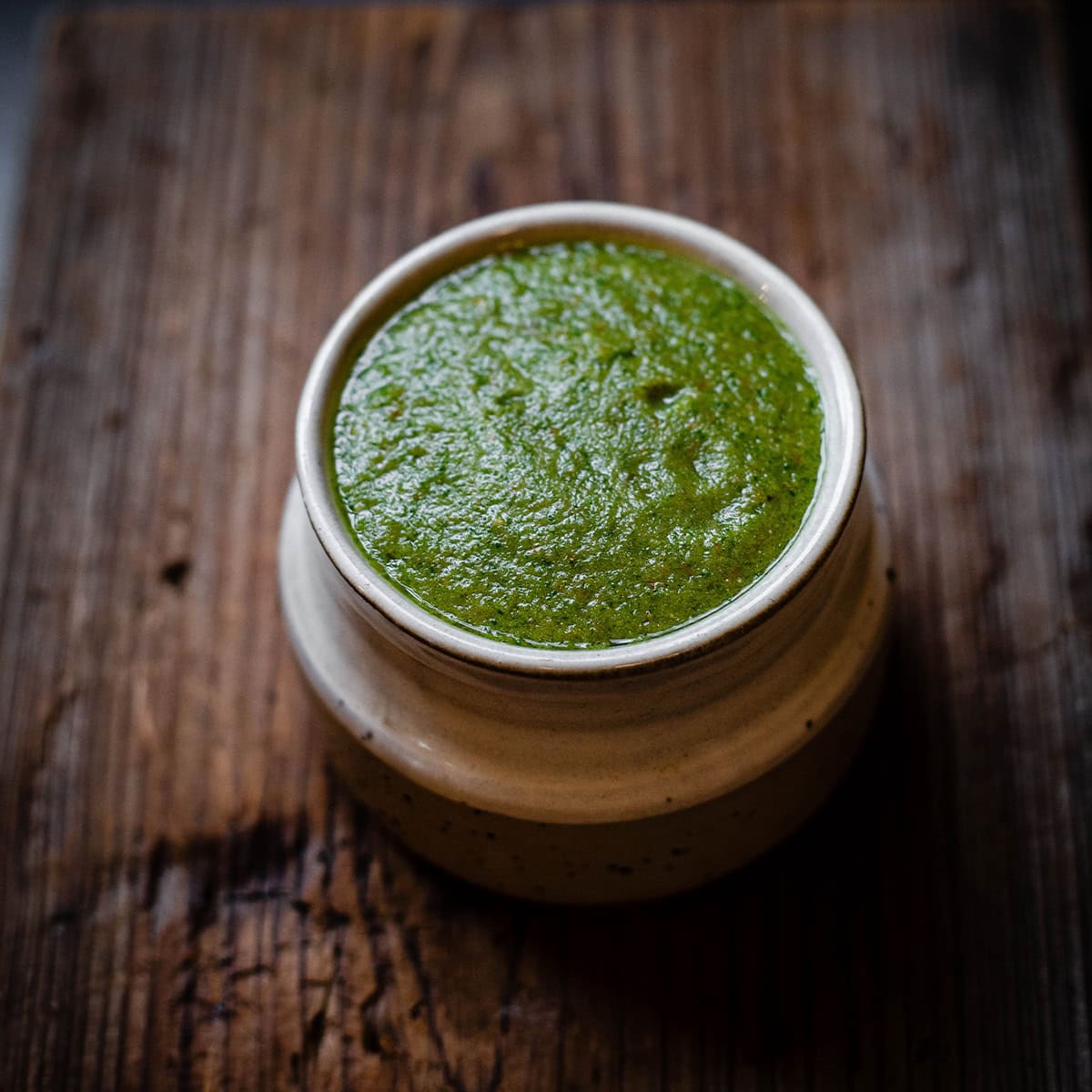
Zhug, also known as zhoug or sahawiq, is a vibrant, fiery green chili sauce originating from Yemen. Fresh, raw, and intensely aromatic, it is a staple in Yemeni homes, served alongside everyday meals to add heat, sharpness, and balance.
This sauce relies on fresh produce, acidity, and spice rather than oil. Blended until coarse but cohesive, zhug delivers powerful flavour in its purest form. In other countries of the Arabian Peninsula it is also called mabooj (Arabic: معبوج), and bisbaas in Somalia.
Read more: Zhug (Zhoug) Recipe – Authentic Yemeni Green Chili SauceJump to:
What Is Zhug?
Zhug is a raw Yemeni chili sauce made by blending fresh green chilies with herbs, aromatics, spices, salt, lemon, tomato, and water. Recipes vary from household to household, but the goal remains the same: a bold condiment that wakes up the palate and complements hearty dishes.
The inclusion of onion and tomato is common in many homes, adding body, natural sweetness, and acidity while maintaining the sauce's sharp character.
Origins of Zhug
Zhug originates in Yemen, where it has long been prepared as a daily table condiment rather than a special-occasion sauce. Its ingredients reflect local agriculture and the region's long-standing relationship with spices, chilies, and fresh herbs.
Prepared fresh and used generously, zhug is an essential part of the Yemeni table, adjusted by taste rather than strict measurements.
Ingredients for Zhug

Green Chillies
Fresh green chilies form the backbone of zhug. Heat level varies depending on the type used, and seeds are often left in for full intensity.
Fresh Coriander
Coriander gives zhug its signature green colour and herbal freshness, balancing the sharp heat of the chillies.
Onion
Onion adds body and a mild sweetness, helping round out the sauce without dulling its bite. Use white or red. Even spring onions work.
Tomato (Optional)
Fresh tomato provides acidity, moisture, and a subtle sweetness, contributing to a fuller, more balanced texture.
Note - I often do not add Tomato. At other times, I add more Tomato so it has a more red appearance.
Garlic
Raw garlic adds pungency and depth, sharpening the overall flavor profile.
Ground Cumin and Coriander
Cumin brings warmth and earthiness, grounding the brightness of the herbs and chilies. Coriander adds brightness and zest.
Lemon Juice
Fresh lemon juice adds essential acidity, lifting the sauce and enhancing its freshness.
Salt and Pepper
Salt balances and sharpens all the flavors and Pepper adds heat and sharpness.
Water
Water is used to blend and loosen the sauce, keeping it light and vibrant rather than heavy.
How to Make Zhug (Blender Method)
Prepare the Chillies
Remove stems. Leave seeds in for full heat or remove for a milder sauce.
Add Ingredients to Blender
Add chillies, garlic, onion, coriander, tomato, cumin, coriander, salt, black pepper and lemon juice.

Blend
Pulse until the mixture is coarse but cohesive. Avoid over-blending (zhug should retain texture.)
Adjust Consistency
Add small amounts of water until thick yet spoonable.
Rest Before Serving
Let the zhug rest for 15-30 minutes to allow flavors to settle.
Texture & Flavour Profile
Zhug should be:
Coarse and rustic
Bright green
Spicy, tangy, garlicky, and fresh
It should taste sharp and alive, never smooth or muted.
Variations Found in Yemeni Cooking
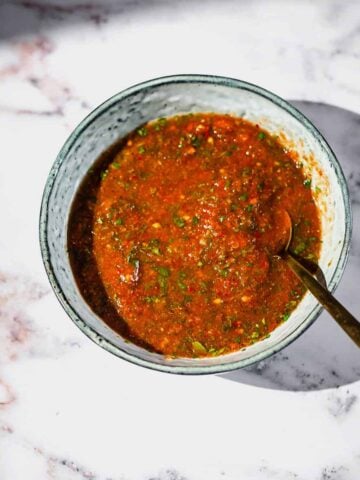
Tomato forward zhug for added acidity. Here is the more tomato forward one that I made yesterday with red onion. This one is Tomato forward.

Onion heavy zhug for subtle sweetness
Herb heavy zhug for softer heat
Thicker zhug eaten almost like a paste
There is no single correct version (only what suits the household).
How Zhug Is Traditionally Served
I eat Zhug with EVERYTHING! I love it so much.
Zhug is served as a table condiment, not cooked into dishes although I have done that too and yum.. It accompanies:
Flatbread
Beans and lentils such as Ful
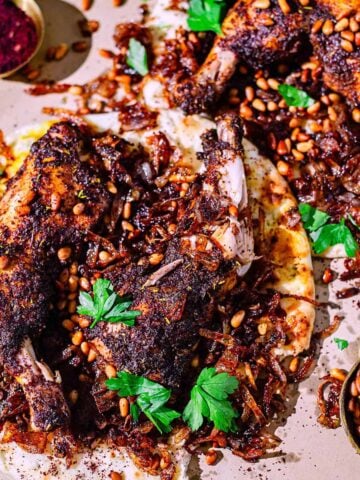
Rice dishes such as Lamb Zurbian
Meat stews
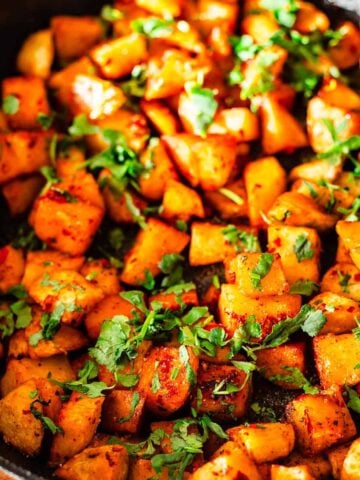
Vegetables such as this Pumpkin with Zhoug Yoghurt
Eggs such as Yemeni Lahsa
A small spoonful goes a long way.
Frequently Asked Questions
What does zhug taste like?
Zhug is spicy, tangy, fresh, and aromatic with balanced heat and acidity.
Does zhug contain oil?
No. Traditional zhug is made without oil, using water to blend the ingredients. You can however drizzle it with Olive Oil.
How long does fresh zhug last?
Fresh zhug is best consumed within 2-3 days when kept in an airtight container in the fridge.
More Salads and Dips:
Easy 10 Minute Mixed Vegetable Raita
Authentic Turkish Tomato, Parsley and Red Onion salad
Easy Lebanese Fattoush Salad with Pomegranate
Olive, Walnut and Pomegranate Salad
Rate and Leave a Comment
Did you make this recipe? i'd love to hear about it! did you try any variations? if you loved this recipe/tried any variations/have some top tips, please comment below. Your reviews make our day and your tips help others to find our recipes and enjoy them too! you can also follow us on instagram and subscribe to our newsletter to get our latest recipes.
📖 Recipe

Zhug (Zhoug) Recipe - Authentic Yemeni Green Chili Sauce
Ingredients
- Handful Chillies
- 5 cloves Garlic
- ½ Onion
- Large handful Coriander
- 1-2 Tomatoes Optional, you will likely not need to add Water if you add Tomatoes
- ½ teaspoon Cumin
- ¼ teaspoon Coriander
- Salt and Pepper According to taste
- ½ Lemon Juice only
Instructions
Prepare the Chillies
- Remove stems. Leave seeds in for full heat or remove for a milder sauce.
Add Ingredients to Blender
- Add chillies, garlic, onion, coriander stems and leaves, tomato, cumin, coriander, salt, black pepper and lemon juice.
Blend
- Pulse until the mixture is coarse but cohesive. Avoid over-blending (zhug should retain texture).
Adjust Consistency
- Add small amounts of water until thick yet spoonable.
Rest Before Serving
- Let the zhug rest for 15-30 minutes to allow flavors to settle.
Leave a Reply