
A good bowl of laksa is all about the broth. Fragrant, spicy and rich with coconut milk, it brings together a wonderful combination of aromatics, spices and seafood. This Malaysian-inspired coconut prawn laksa starts with a homemade paste made from dried and fresh chillies, ginger, galangal, lemongrass, garlic and coriander seeds.
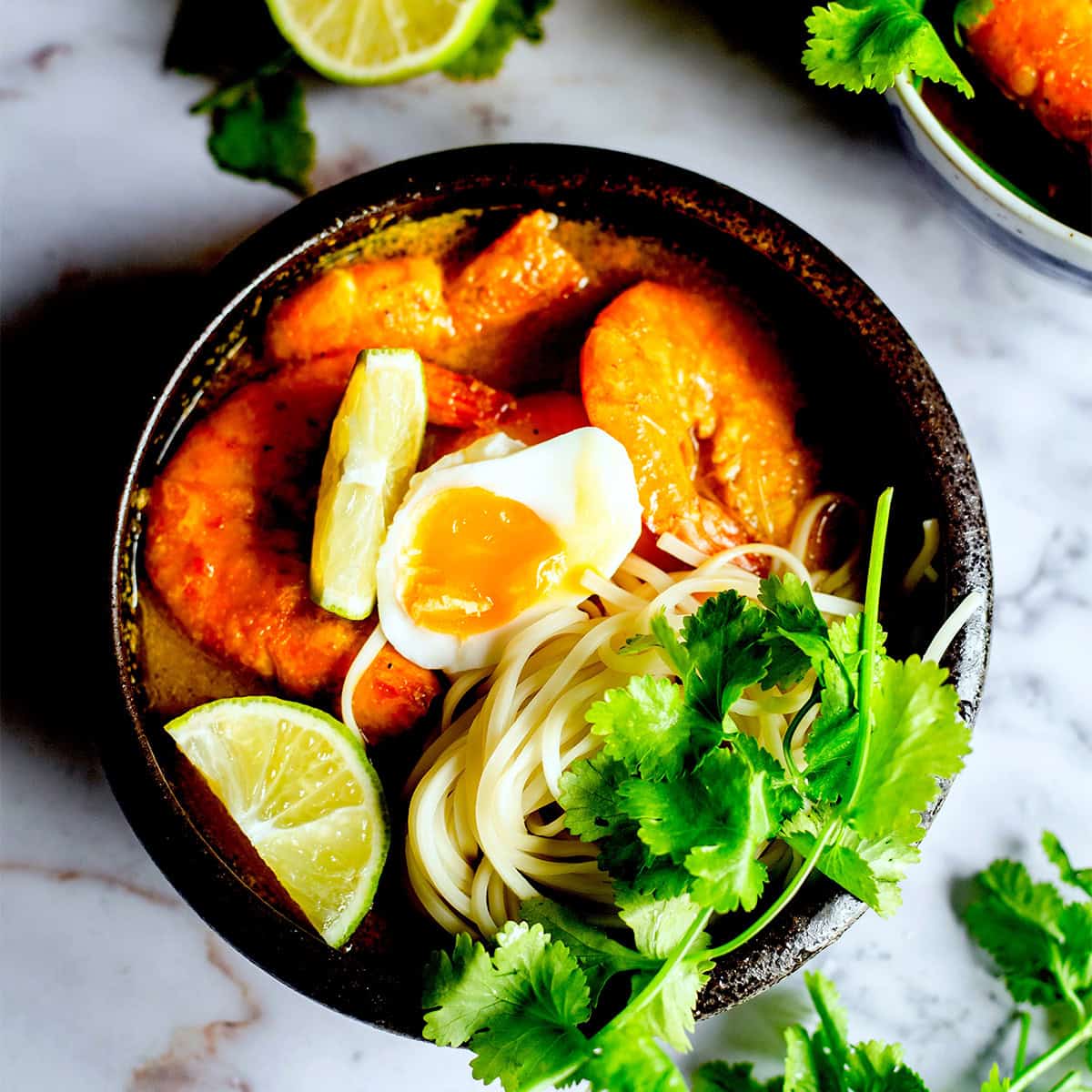
The paste is cooked in oil before being simmered with coconut milk, stock, fish sauce and kaffir lime leaves.
Raw prawns are added towards the end of cooking, allowing them to cook gently in the fragrant broth. Everything is served over rice noodles with boiled eggs, fresh coriander and lime wedges.
Making your own laksa paste takes a little preparation, but it makes a noticeable difference to the finished dish. You can also prepare it ahead of time, which makes putting the soup together much quicker.
Jump to:
Recipe Snapshot
Cuisine: Malaysian-inspired
Course: Main Course
Servings: 2
Prep Time: 20 minutes
Cook Time: 35 minutes
Total Time: 55 minutes
Difficulty: Easy to moderate
Why You'll Love This Recipe
Homemade laksa paste - The combination of dried and fresh chillies, ginger, galangal and lemongrass creates a fragrant base for the broth.
A flavourful coconut broth - Coconut milk balances the heat from the chillies, while fish sauce and shrimp paste add savoury depth.
Plenty of prawns - This recipe uses 400g of prawns, making them a proper part of the meal rather than just a garnish.
Easy to prepare ahead - The laksa paste can be made in advance, making the soup quicker to put together when you're ready to eat.
Ingredient Notes
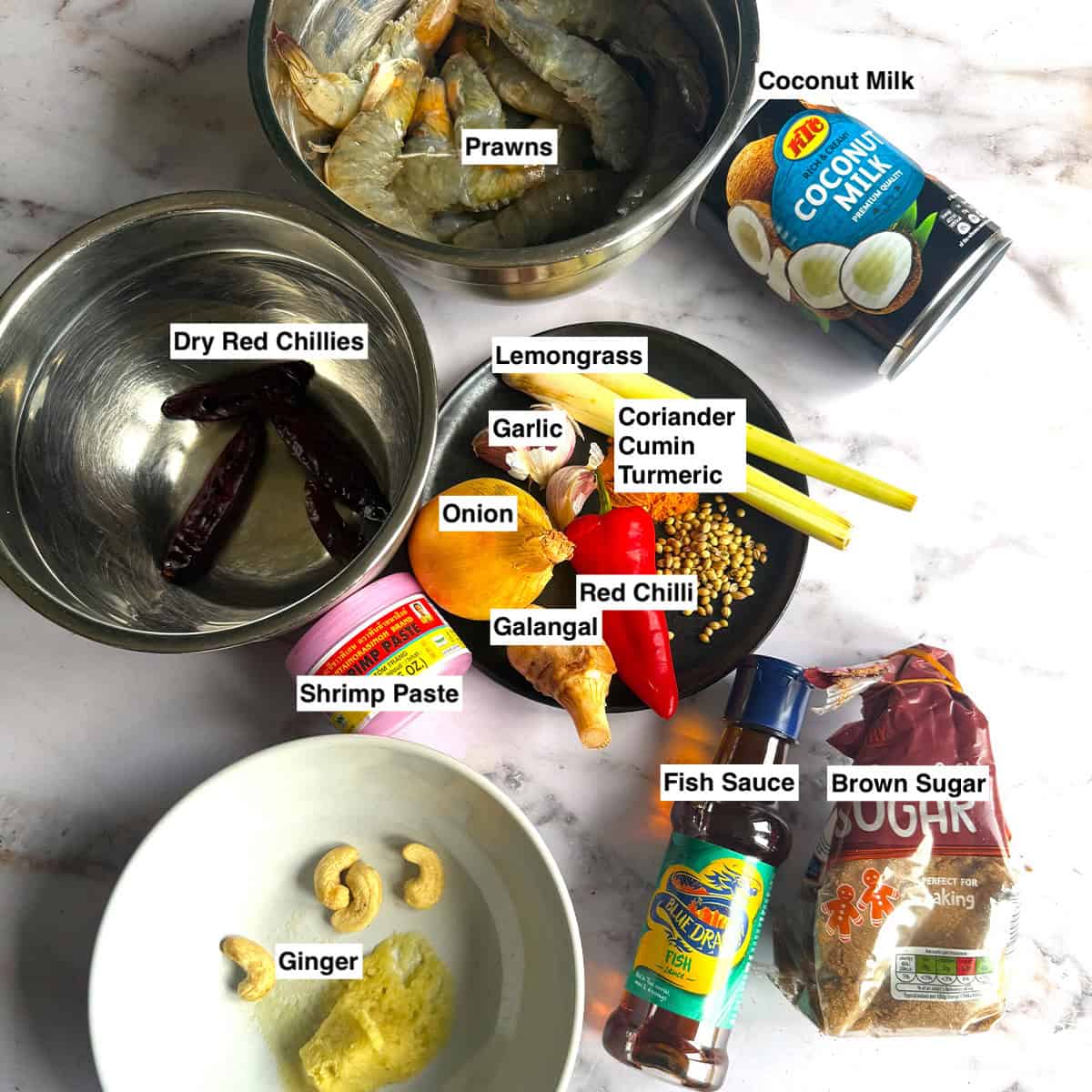
Dried chillies - These provide a deeper chilli flavour than fresh chillies alone. Soak them in hot water for 15-20 minutes until softened. Remove the seeds if you prefer a milder paste.
Fresh red chillies - Add freshness and extra heat to the paste. Adjust the quantity according to your preference.
Onion - Forms the aromatic base of the paste and adds natural sweetness.
Garlic - Adds savoury depth and works particularly well with the ginger and lemongrass.
Ginger - Brings warmth and a little freshness to the laksa paste.
Galangal - A fragrant root with citrusy, peppery notes. It is commonly used in Southeast Asian cooking. If you cannot find it, use additional ginger, although the flavour will be slightly different.
Turmeric - Adds an earthy flavour and gives the paste its golden colour.
Lemongrass - Use the tender white parts of the stalks. These provide the distinctive citrus aroma that works so well in laksa.
Dried shrimp paste (belacan) - A little goes a long way. It adds a savoury, deeply umami flavour to the paste. Check that your chosen brand is halal suitable.
Coriander seeds - Add warmth and fragrance. Freshly ground seeds are particularly aromatic.
Ground cumin - Adds an earthy, warming flavour that complements the coriander and other spices.
Coconut milk - Gives the broth its creamy consistency and balances the heat from the chillies. Full-fat coconut milk works particularly well.
Stock - Chicken or seafood stock both work well. Use halal-certified stock where needed.
Fish sauce - Adds saltiness and savoury depth. The quantity can be adjusted to taste, particularly as different brands vary in saltiness.
Kaffir lime leaves (makrut lime leaves) - These fragrant leaves bring a fresh, citrusy aroma to the broth. Lightly bruise them before adding to release their fragrance. Two leaves provide a gentle citrus note.
Brown sugar - Balances the heat and savoury flavours in the broth.
Prawns - Raw peeled prawns are ideal because they cook directly in the broth and absorb some of its flavour. Keeping the tails on also makes for a lovely presentation.
Rice noodles - Dried rice vermicelli is a good choice because it is light and allows the broth to remain the focus. Fresh rice noodles are another option.
Boiled eggs - A classic addition to a noodle soup, adding a little extra substance to each bowl.
Fresh coriander and lime - These brighten the finished laksa. A squeeze of fresh lime just before eating makes a real difference.
How to Make Malaysian Coconut Prawn Laksa
1. Soak the dried chillies
Place the dried chillies in a heatproof bowl and cover with boiling water. Leave for 15-20 minutes until softened.
Drain well and discard the soaking water.
2. Make the laksa paste
Add the soaked dried chillies, fresh red chillies, onion, garlic, ginger, galangal, turmeric, lemongrass, shrimp paste, coriander seeds and cumin to a blender or food processor.
Add 2-3 tablespoons of water or stock to help everything blend.
Process until you have a reasonably smooth paste, scraping down the sides as necessary.
3. Cook the paste
Heat the vegetable oil in a large wok or heavy-based saucepan over medium heat.
Add the laksa paste and cook for 8-10 minutes, stirring regularly.
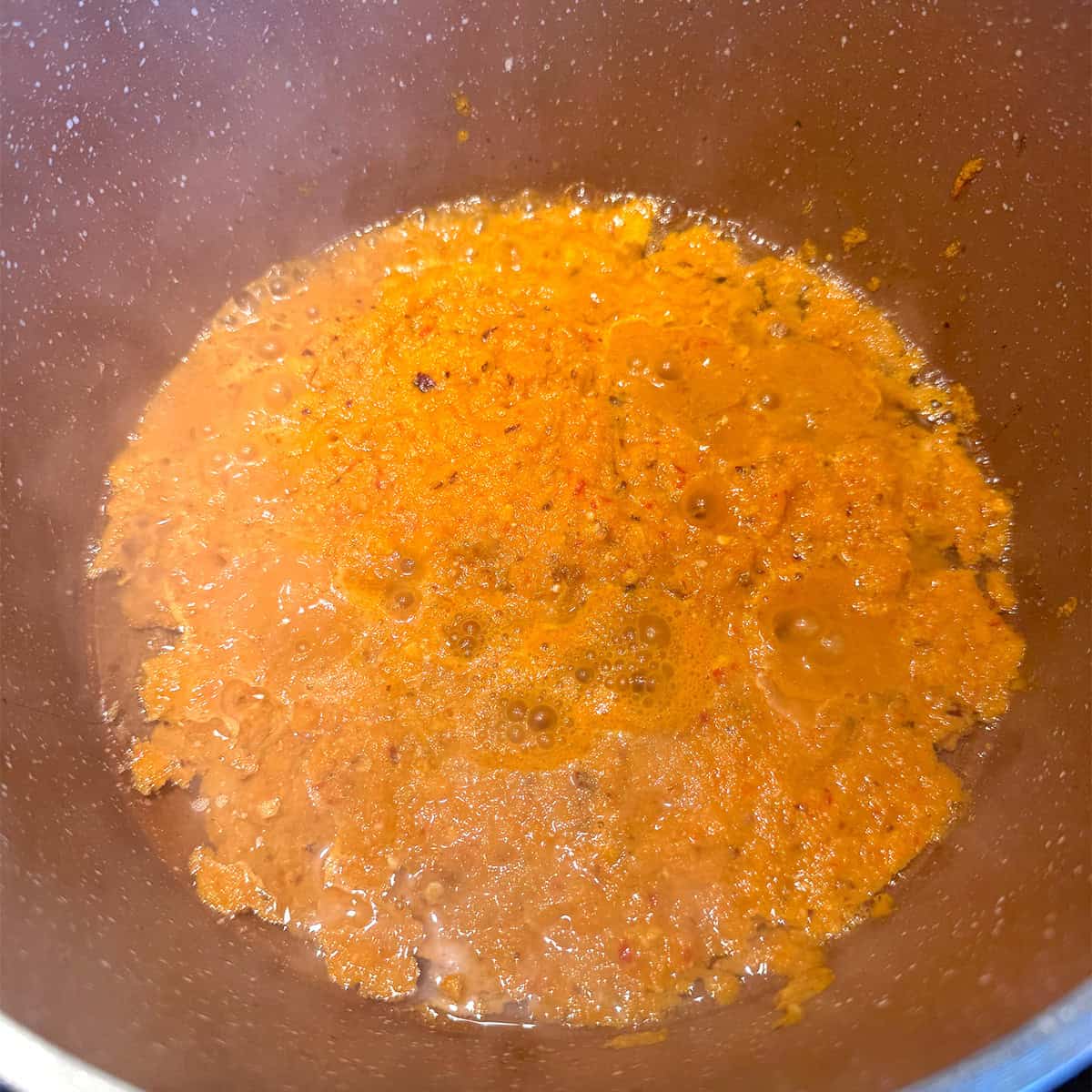
The paste should deepen in colour and become fragrant. Cooking it in the oil helps develop the flavours of the aromatics and spices.
4. Make the coconut broth
Pour in the coconut milk and stock. Add the fish sauce, two lightly bruised kaffir lime leaves and brown sugar.
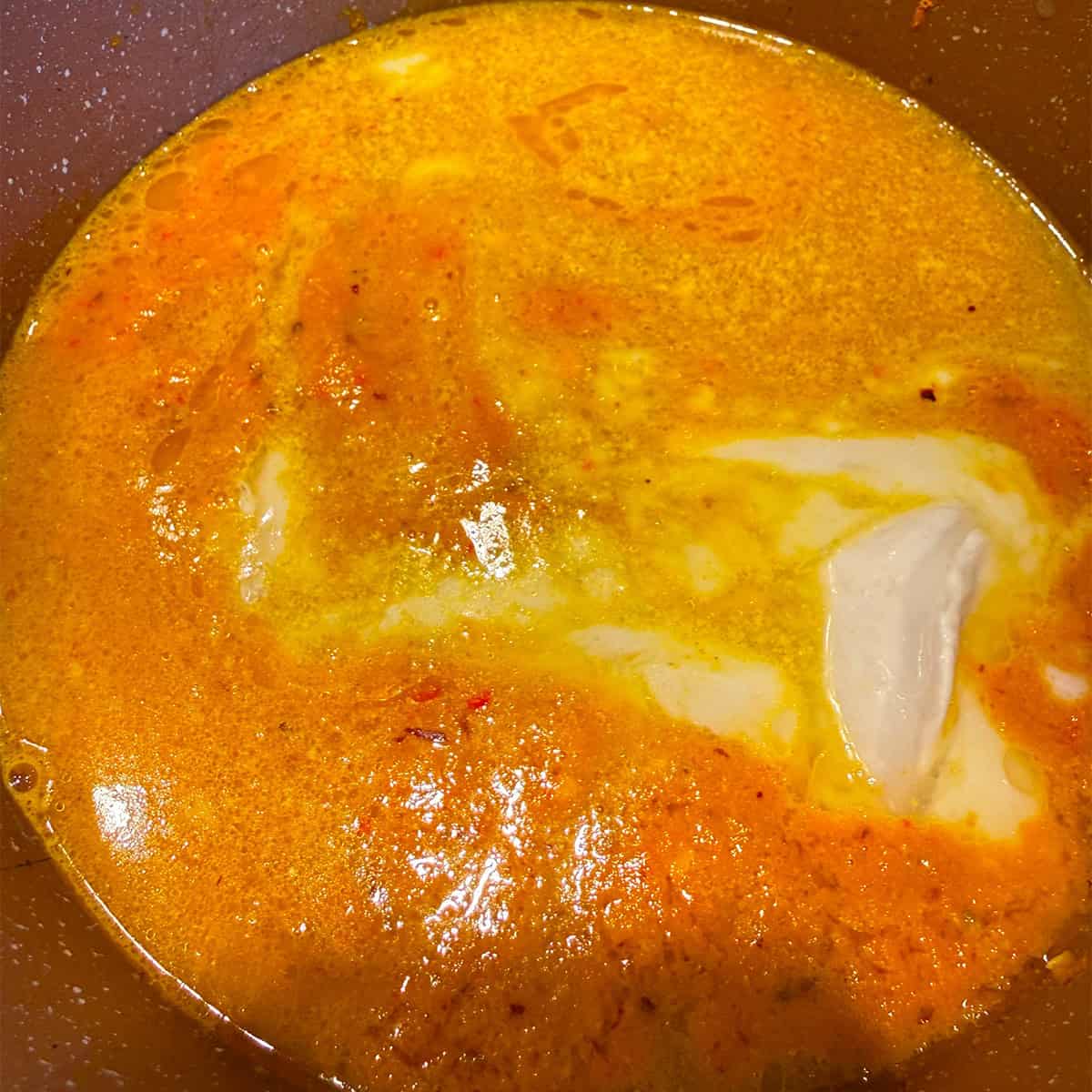
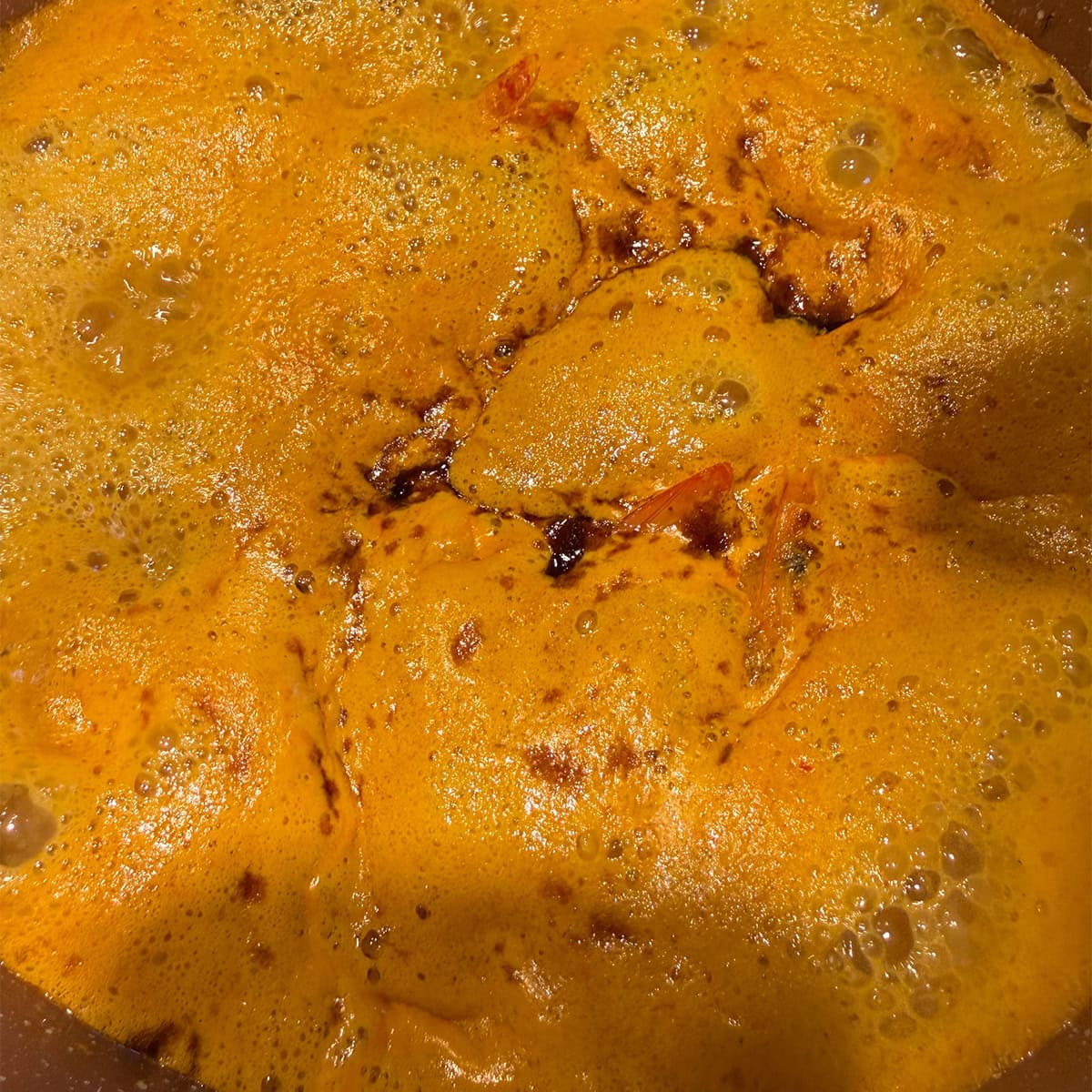
Stir well and bring to a gentle boil.
Reduce the heat and simmer uncovered for 15-20 minutes, allowing the flavours to develop.
Taste and adjust the seasoning with salt and black pepper as needed.
Remove the lime leaves before serving.
5. Prepare the noodles
Cook the rice noodles according to the packet instructions.
Drain thoroughly and divide between two serving bowls.
I prefer preparing the noodles separately rather than adding them directly to the broth. This prevents them from soaking up too much liquid and becoming overly soft.
6. Cook the prawns
Add the raw peeled prawns to the gently simmering broth.
Cook for approximately 3-4 minutes, depending on their size, until they turn pink and opaque and are cooked through.
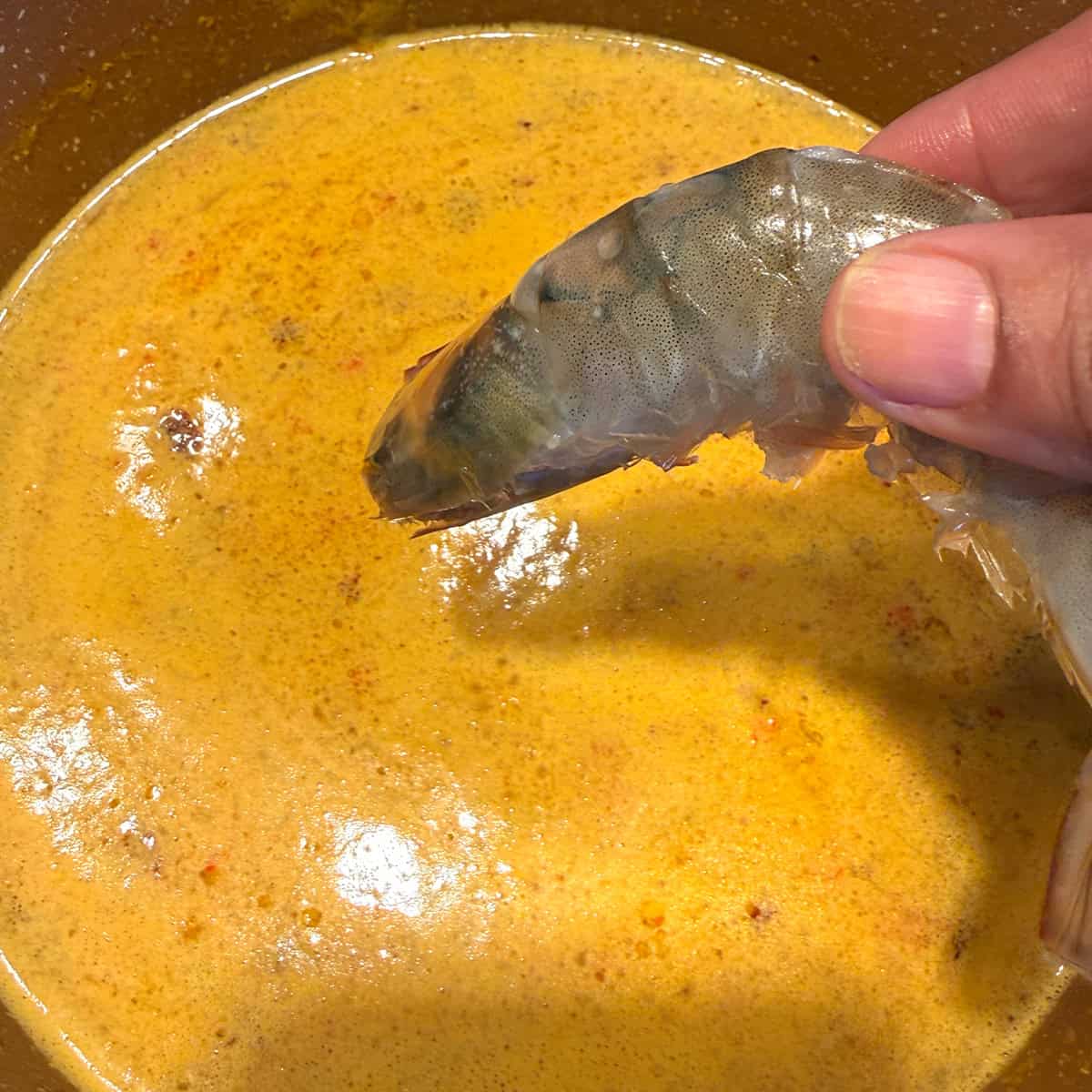
Avoid overcooking them as they can quickly become rubbery.
7. Assemble the laksa
Ladle the hot coconut broth and prawns over the noodles.
Top each bowl with a halved boiled egg and a generous handful of fresh coriander leaves.
Finish with a squeeze of lime juice and a sprinkling of chilli flakes if you enjoy a little extra heat.
Serve immediately while piping hot.
Tips for Making the Best Laksa
Cook the paste properly - Don't rush this stage. Give the paste enough time in the oil to become fragrant and develop its flavour.
Use full-fat coconut milk - This gives the broth a richer consistency and helps balance the heat from the chillies.
Adjust the seasoning - Fish sauce can vary in saltiness, so start with 2 tablespoons and add more if needed. Balance the broth with a little extra lime or brown sugar if required.
Keep the noodles separate - This is particularly useful if you are not serving the laksa immediately. Noodles left in the broth will continue absorbing liquid.
Don't overcook the prawns - Add them towards the end of cooking so they remain tender and juicy.
Prepare the paste ahead - You can blend the paste in advance and refrigerate it until you are ready to cook.
Variations
Adjust the heat - Reduce the number of fresh chillies or remove the seeds from the dried chillies for a milder broth.
Use chicken instead - Replace the prawns with thinly sliced chicken breast or thigh. Make sure the chicken is thoroughly cooked before serving.
Use different seafood - White fish, squid or mussels can also work well in a seafood laksa.
Change the noodles - Rice vermicelli is lovely here, but thicker rice noodles can be used if you prefer a more substantial noodle soup.
Make it creamier - Add a little extra coconut milk if you prefer a richer broth. You may need to adjust the seasoning afterwards.
What to Serve with Prawn Laksa
This laksa is substantial enough to serve as a meal on its own. The noodles, prawns and coconut broth make a satisfying bowl of food.
Serve with extra lime wedges, fresh coriander and chilli flakes so everyone can adjust their bowl to taste.
Storage and Reheating
Refrigerator: Store any leftover broth and prawns in an airtight container in the fridge for up to 2 days. Keep the noodles separate and refrigerate promptly.
Reheating: Reheat the broth gently in a saucepan until piping hot throughout. Avoid vigorous boiling, particularly once the prawns have been added.
Freezing: The broth is best frozen without the noodles or prawns. Freeze in an airtight container for up to 3 months. Defrost overnight in the fridge and reheat thoroughly before adding freshly cooked prawns and noodles.
Frequently Asked Questions
What noodles are best for laksa?
Rice vermicelli is a good choice because it is light and allows the broth to remain the focus. This recipe uses 100g dried rice vermicelli for two portions. Fresh rice noodles can also be used.
Is Malaysian laksa spicy?
It can be, although the heat varies depending on the recipe and the chillies used. This version uses both dried and fresh chillies. You can reduce the quantities to suit your preference.
Can I make laksa paste ahead of time?
Yes. Prepare the paste and store it in an airtight container in the refrigerator for up to 3 days. You can also freeze it in individual portions for up to 3 months.
Can I use cooked prawns?
Yes. However, raw prawns are preferable because they cook gently in the broth and take on some of its flavour. If using cooked prawns, add them towards the end, just long enough to heat through.
Can I make laksa without galangal?
Yes. Ginger can be used as a substitute, although galangal has a more distinctive citrusy and peppery flavour.
Can I make laksa without shrimp paste?
You can omit it, but the finished broth will have less savoury depth. You may need to adjust the seasoning to compensate.
Can I prepare laksa in advance?
Yes. You can prepare the paste and broth ahead of time and refrigerate them separately. When ready to serve, reheat the broth, cook the noodles and add the prawns.
What Is Malaysian Laksa?
Laksa is a noodle soup found across Southeast Asia, with different regional variations and ingredients.
This recipe is inspired by Malaysian curry laksa, which is known for its aromatic spice paste and coconut-based broth. Other versions, such as assam laksa, have a very different flavour profile, relying on a sour, tamarind-based fish broth rather than coconut milk.
The combination of chillies, lemongrass, galangal, shrimp paste and coconut milk gives this version its distinctive character.
Noodle and prawn recipes:



Did you make this recipe?
Rate and Leave a comment
Did you make this recipe? i'd love to hear about it! did you try any variations? if you loved this recipe/tried any variations/have some top tips, please leave a star rating and comment below. Your reviews make our day and your tips help others to find our recipes and enjoy them too!
you can also follow us on instagram and subscribe to our newsletter to get our latest recipes.
📖 Recipe
Malaysian Coconut Prawn Laksa
Ingredients
Laksa Paste
- 6 dried red chillies soaked in hot water
- 2 fresh red chillies
- 1 large onion roughly diced
- 4 garlic cloves crushed
- 1 inch fresh ginger
- 1 thumb-sized piece of galangal or additional ginger
- 1 teaspoon ground turmeric
- 2 lemongrass stalks white parts only, roughly chopped
- 1 tablespoon dried shrimp paste belacan
- 1 tablespoon coriander seeds
- 1 tablespoon ground cumin
- 2 - 3 tablespoon water or stock as needed for blending
- Salt and black pepper to taste
Laksa Broth
- 2 tablespoon vegetable oil
- 400 ml coconut milk
- 750 ml chicken or seafood stock
- 2 - 3 tablespoon fish sauce
- 2 kaffir lime leaves makrut lime leaves, lightly bruised
- 1 tablespoon brown sugar
- Salt to taste
- 400 g raw peeled prawns tails on
- To Serve
- 100 g dried rice vermicelli noodles or 200-250g fresh rice noodles
- 2 boiled eggs halved
- A generous handful of fresh coriander leaves
- 1 lime cut into wedges
- Red chilli flakes optional
Instructions
Soak the dried chillies
- Place the dried chillies in a heatproof bowl and cover with boiling water. Leave for 15-20 minutes until softened.
- Drain well and discard the soaking water.
Make the laksa paste
- Add the soaked dried chillies, fresh red chillies, onion, garlic, ginger, galangal, turmeric, lemongrass, shrimp paste, coriander seeds and cumin to a blender or food processor.
- Add 2-3 tablespoons of water or stock to help everything blend.
- Process until you have a reasonably smooth paste, scraping down the sides as necessary.
Cook the paste
- Heat the vegetable oil in a large wok or heavy-based saucepan over medium heat.
- Add the laksa paste and cook for 8-10 minutes, stirring regularly.
- The paste should deepen in colour and become fragrant. Cooking it in the oil helps develop the flavours of the aromatics and spices.
Make the coconut broth
- Pour in the coconut milk and stock. Add the fish sauce, two lightly bruised kaffir lime leaves and brown sugar.
- Stir well and bring to a gentle boil.
- Reduce the heat and simmer uncovered for 15-20 minutes, allowing the flavours to develop.
- Taste and adjust the seasoning with salt and black pepper as needed.
- Remove the lime leaves before serving.
Prepare the noodles
- Cook the rice noodles according to the packet instructions.
- Drain thoroughly and divide between two serving bowls.
- I prefer preparing the noodles separately rather than adding them directly to the broth. This prevents them from soaking up too much liquid and becoming overly soft.
Cook the prawns
- Add the raw peeled prawns to the gently simmering broth.
- Cook for approximately 3-4 minutes, depending on their size, until they turn pink and opaque and are cooked through.
- Avoid overcooking them as they can quickly become rubbery.
Assemble the laksa
- Ladle the hot coconut broth and prawns over the noodles.
- Top each bowl with a halved boiled egg and a generous handful of fresh coriander leaves.
- Finish with a squeeze of lime juice and a sprinkling of chilli flakes if you enjoy a little extra heat.
- Serve immediately while piping hot.

Leave a Reply