
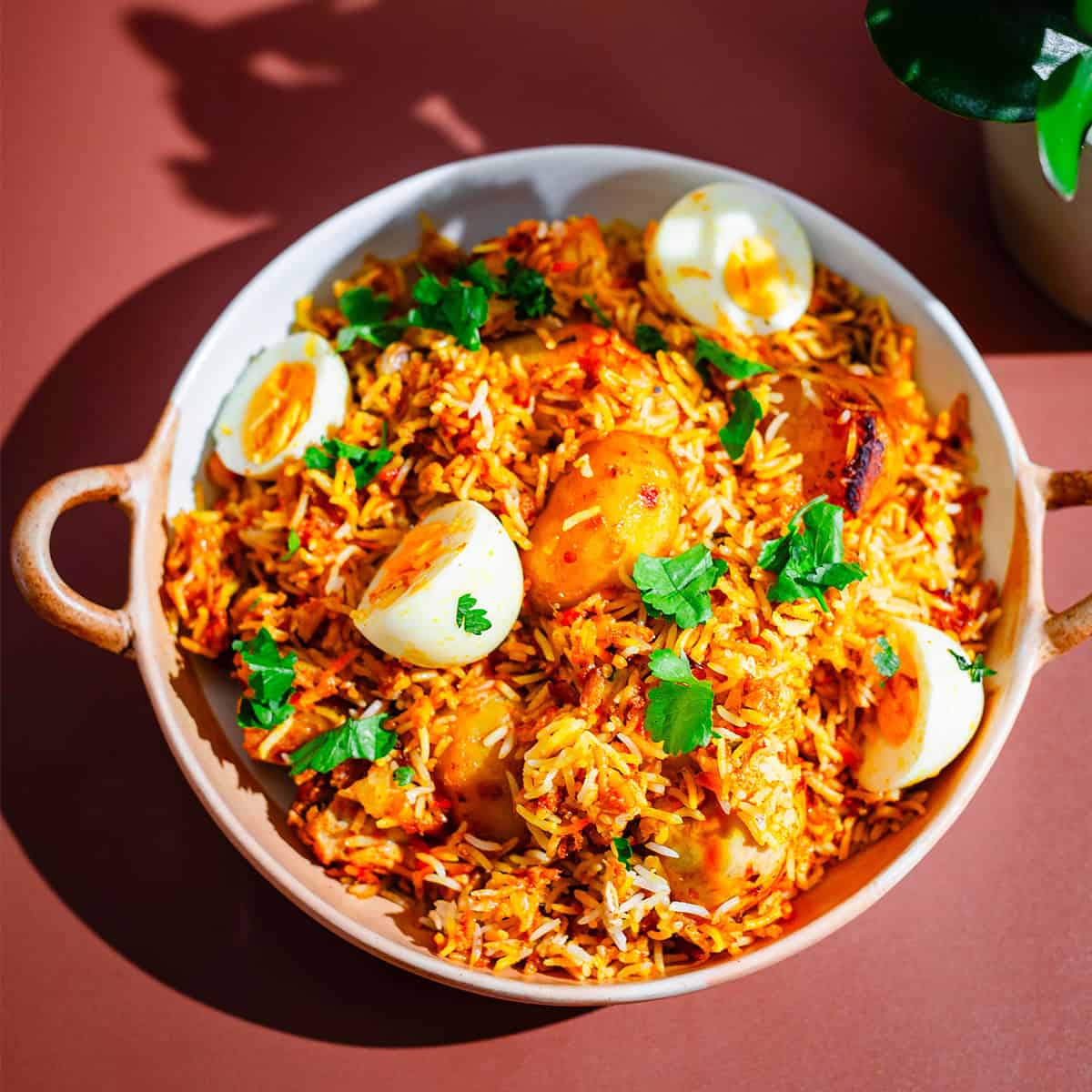
My mum's biryani is the one all six of us siblings grew up loving. Our friends love it too, which is convenient because this recipe makes enough to feed a hungry family gathering.
Jump to:
- Quick snapshot
- Why you'll love this biryani
- What makes biryani so special?
- What is biryani?
- Biryani varieties
- Ingredients you'll need
- HOW TO MAKE MUM'S BIRYANI
- Variations
- Tips for the best biryani
- What to serve with biryani
- Storage and reheating
- Frequently asked questions
- MORE GREAT INDIAN RICE RECIPES:
- ON THE SIDE
- 📖 Recipe
It is vibrant, fragrant and full of flavour, with tender meat, a richly spiced tomato curry, fluffy basmati rice, golden fried onions and saffron milk. You can make it with lamb, chicken or vegetables, depending on who's coming over and what you're in the mood for.
The full recipe feeds at least 20 people, making it ideal for Eid, family celebrations and those occasions when someone says, "It's only a few people coming." I've included the smaller quantities for six too, because not every Tuesday requires the catering equivalent of a wedding.
Quick snapshot
- Cuisine: Indian-inspired family recipe
- Serves: Six using the smaller quantities; the original large batch feeds at least 20
- Main ingredients: Lamb or chicken, basmati rice, tomatoes, onions, whole spices, ground spices, potatoes, saffron milk and butter
- Cooking method: Prepare the meat curry and rice separately, layer and steam
- Best served with: Onion raita, kachumber salad, papadums and achaar
- Dietary notes: Halal-friendly when made with suitable ingredients; contains dairy
Why you'll love this biryani
- It's a family favourite. This is my mum's recipe, loved by all six siblings and our friends.
- The flavour is worth the effort. Tender meat, a properly cooked masala and fragrant rice make all the difference.
- It's made for sharing. The full batch feeds at least 20, so it's a brilliant option for a large gathering.
- You can choose your filling. Lamb, chicken or vegetables all work, so you can adapt it to suit your family.
- It's a proper layered biryani. The curry, rice, fried onions, butter and saffron milk each bring something to the finished dish.
What makes biryani so special?
There is a reason people will travel for a good biryani. It is so much more than delicious food. To me, it means celebration, gathering, home, Mum, Dad, family and love.
Then there is the anticipation of lifting the lid. The steam rises, the fragrance of the spices fills the kitchen and you see the layers of rice, golden onions and colourful saffron rice underneath.
And then comes the best part: digging down into the pot to get a bit of everything. Fluffy rice, deeply flavoured curry, tender meat and those little buttery, fragrant pockets throughout.
If you've followed Asma Khan's work, you may also remember the interest in biryani from Paul Rudd. It makes sense to me. A dish that means so much to so many people doesn't need much help making an impression.
What is biryani?
Biryani is a rice dish made with aromatic rice and spiced meat, chicken, fish or vegetables. It has many regional variations, each with its own techniques, ingredients and traditions.
Some versions cook raw marinated meat and rice together. Others prepare the curry and rice separately, then layer them in a pot to finish cooking together. There are also styles in which the rice and curry are served separately.
My mum's version uses a cooked meat curry and parboiled basmati rice. The two are layered with fried onions, butter, saffron milk and coriander, then steamed until the rice is cooked and the flavours have mingled.
Biryani varieties
There are many regional variations, each worth exploring.
- Lucknowi biryani: Also known as Awadhi biryani, this style is associated with fragrant whole spices and the use of yakhni, a flavourful meat stock.
- Masoor biryani: A lentil-based variation made with masoor dal, spices and rice.
- Kolkata biryani: Known for a more delicate spice profile and its famous addition of potato, often served alongside meat.
- Memoni biryani: Associated with the Memon community, this is a bold, spicy style often made with lamb or goat.
- Hyderabadi biryani: One of the best-known varieties. The kacchi method layers raw marinated meat with partially cooked rice before cooking them together. Try my Hyderabadi Chicken Biryani.
- Malabar biryani: From Kerala's Malabar region, this fragrant style often includes herbs, fried onions, nuts and dried fruit.
- Calicut biryani: A celebrated Malabar variation traditionally made with short-grain rice and a distinctive blend of spices.
- Parda biryani: Cooked beneath a pastry covering. My Parda Biryani is a lovely choice for a gathering.
Ingredients you'll need
The quantities below are for six. The original large-batch recipe serves at least 20, but its full ingredient quantities need checking before the larger version is published.
Saffron milk
- 4 strands saffron: Infuse these in the milk to give the rice a distinctive aroma and golden colour.
- 30 ml milk: Enough to distribute the saffron through the layers.
Potatoes
- Neutral oil, for deep-frying: Use enough to fry the potatoes safely.
- 2 potatoes: Peel and cut into 3 cm cubes. Frying gives them colour and helps them hold their shape when added to the curry.
Lamb
- 1 kg lamb shoulder: Cut into manageable pieces. Shoulder works well because it becomes tender and flavourful during cooking.
- 1 cinnamon stick: Adds warmth and a woody aroma.
- 1 bay leaf: Gives the cooking liquid a subtle herbal note.
- 2 cloves: Add a warm, pungent fragrance.
- 2 cardamom pods: Bring a characteristic aromatic flavour.
- Salt, to taste: Season the meat as it cooks.
- 1 teaspoon crushed ginger: Adds warmth and freshness.
- 1 teaspoon crushed garlic: Adds savoury depth.
Curry
- 2 tablespoon oil: Forms the base for frying the onions and blooming the spices.
- 1 large onion, finely sliced: Cook until deeply golden to develop sweetness and flavour.
- 2 cardamom pods: Add a floral, aromatic note.
- 2 cinnamon sticks: Bring warmth to the masala.
- 2 bay leaves: Add herbal fragrance.
- 1 star anise: Adds a sweet, liquorice-like aroma.
- 1 tablespoon dried fenugreek leaves (kasuri methi): These give the curry a distinctive savoury, slightly bitter fragrance. Crumble the leaves between your fingers before adding them. This recipe uses dried leaves, not fenugreek seeds.
- 1 teaspoon crushed ginger: Adds warmth.
- 1 teaspoon crushed garlic: Builds the savoury base.
- 1 teaspoon crushed green chilli: Adds heat. Adjust to suit your family.
- 240 g puréed plum tomatoes: Give the masala body and acidity.
- 1 teaspoon ground coriander: Adds an earthy, citrus-like note.
- 1 teaspoon ground cumin: Contributes warmth and savouriness.
- 1 teaspoon ground red chilli: Adds heat and colour.
- Salt, to taste: Season the curry and adjust before layering.
- ½ teaspoon ground turmeric: Adds colour and an earthy flavour.
- ¼ teaspoon ground cardamom: Brings extra fragrance.
- ¼ teaspoon ground fennel: Adds a gentle sweetness.
- ¼ teaspoon garam masala: Rounds out the spice mixture.
- ⅛ teaspoon ground mace: Adds a warm, aromatic note.
Rice
- 3 cups aged basmati rice: Long-grain aged basmati is my preference because it can cook into separate, fluffy grains when handled properly. I like Tilda or Mustafa rice.
- 6 cups water: Listed in the original six-person recipe for parboiling the rice before draining.
- ¼ onion, diced: Adds flavour to the cooking water.
- 1 peppercorn: Adds a subtle spice note.
- 1 clove: Contributes warmth.
- 1 bay leaf: Adds herbal fragrance.
- 1 cinnamon stick: Infuses the rice with warmth.
- 1 cardamom pod: Adds a fragrant aroma.
- ¾ teaspoon crushed garlic: Adds savoury depth.
- ¾ teaspoon crushed ginger: Brings warmth and fragrance.
- Salt, to taste: Seasons the rice.
For layering
- Butter, cut into small pieces: Dot between the layers to enrich the rice.
- Fried onions: Add sweetness, colour and texture.
- Fresh coriander, chopped: Brings freshness to the finished biryani.
- Saffron milk: Drizzle over the layers.
- Powdered food colouring mixed with a little water, optional: Adds contrasting patches of colour to the top layer.
HOW TO MAKE MUM'S BIRYANI
1. Cook the lamb
Put the lamb in a large pot with the cinnamon stick, bay leaf, cloves, cardamom, salt, crushed ginger and crushed garlic.
Cook until the lamb is tender. The original batch took around 50 minutes, although the time depends on the cut and size of the pieces. Keep checking the pot and add a little water if needed to prevent it catching.
Reserve any cooking liquid if there is some, as you may need a little to loosen the curry.
For chicken, adjust the cooking time according to the cut and make sure the meat is cooked through without becoming dry.
2. Fry the potatoes
Peel the potatoes and cut them into 3 cm cubes. Deep-fry until golden, then drain on kitchen paper.
They will finish cooking in the curry, so they don't need to be completely soft in the centre at this stage.
3. Brown the onions and whole spices
Heat the oil in a large, heavy-based pot. Add the sliced onion, cardamom, cinnamon, bay leaves and star anise.
Cook over a medium heat, stirring regularly, until the onions are deeply golden. Don't rush this stage or let the onions burn. Burnt onions can make the whole curry bitter, and that's a lot of effort to put into something you then have to rescue.
4. Add the aromatics and spices
Add the ginger, garlic and green chilli. Cook for a minute or two until fragrant.
Stir in the puréed tomatoes, followed by the ground coriander, cumin, red chilli, turmeric, cardamom, fennel, garam masala, mace, dried fenugreek leaves and salt.
Cook until the tomatoes have thickened and the oil begins to separate around the edges. This helps cook out the raw tomato flavour and develops a richer masala.
5. Add the meat and potatoes
Add the cooked lamb to the masala and stir until every piece is coated. Add the fried potatoes and a little reserved cooking liquid if the curry needs loosening.
Simmer over a low heat until the flavours come together and the oil begins to rise around the sides.
Taste and adjust the salt and chilli before assembling the biryani. Once everything is layered, adjusting the seasoning becomes much more difficult.
6. Parboil the rice
Wash the basmati rice several times until the water runs much clearer. Soak it beforehand if time allows, then drain.
Bring the water to the boil with the diced onion, peppercorn, clove, bay leaf, cinnamon stick, cardamom, ginger, garlic and salt.
Add the rice and cook until it is around 70-80% cooked. The grains should have lengthened but still have a little firmness in the centre.
Drain immediately. The rice will finish cooking during the final steaming stage, so don't leave it sitting in hot water.
7. Prepare the saffron milk
Warm the milk gently and add the saffron strands. Leave to infuse while you prepare the pot.
If using food colouring, mix a little powdered colouring with water in a separate bowl.
8. Layer the biryani
Choose a large, heavy-based pot with a well-fitting lid.
Spread a layer of rice over the base, followed by some of the curry. Continue alternating the rice and curry until everything is used up, finishing with rice on top.
Scatter fried onions, coriander and small pieces of butter between the layers. Drizzle over the saffron milk as you go, reserving some for the final layer.
Add a little diluted food colouring over the top if using. You want patches of colour rather than mixing everything together.
9. Steam the biryani
Cover the pot tightly with foil, then place the lid on top to trap the steam.
For the six-person quantity, the original method specifies around 20-30 minutes over a very low heat. Check that the rice finishes cooking without catching at the bottom. A heat diffuser can help if your hob runs hot.
The original large-batch instructions specify approximately one hour of steaming, but the final timing should be checked against your actual method and pot size.
Leave the biryani to rest for around 10 minutes before serving. Spoon down through the layers so everyone gets rice, curry and those lovely golden onions.


HOW TO MAKE A SMALLER QUANTITY - FOR 6
Ingredient quantities for 6:
Saffron Milk
4 strands Saffron
30 ml Milk
Potatoes
Oil for deep frying
2 Potatoes peeled and chopped into 3 cm cubes
Lamb
1 kg Lamb Shoulder
1 Cinnamon Stick
1 Bay Leaf
2 Cloves
2 Cardamom Pods
Salt
1 teaspoon crushed Ginger
1 teaspoon crushed Garlic
Curry
2 tablespoon Oil
1 large Onion
2 Cardamom Pods
2 Cinnamon Sticks
2 Bay Leaves
1 Star Anise
Tbsp Fenugreek
1 teaspoon crushed Ginger
1 teaspoon crushed Garlic
1 teaspoon crushed Green Chilli
240g Pureed Plum Tomatoes
1 teaspoon Ground Coriander
1 teaspoon Ground Cumin
1 teaspoon Ground Red Chilli
Salt
½ teaspoon Ground Turmeric
¼ teaspoon Ground Cardamom
¼ teaspoon Ground Fennel
¼ teaspoon Ground Garam Masala
⅛ teaspoon Ground Mace
Rice
3 cups Rice
6 cups Water
¼ Onion, diced
1 Peppercorn
1 Clove
1 Bay Leaf
1 Cinnamon Stick
1 Cardamom Pod
¾ teaspoon crushed Garlic
¾ teaspoon crushed Ginger
Salt
Instructions
The instructions for the smaller quantity remains the same but you will need to cook it for less time once covered with foil. (25 - 40 minutes).
Variations
- Chicken biryani: Replace the lamb with chicken and adjust the cooking time to suit the cut. Bone-in chicken adds flavour, while boneless chicken cooks more quickly.
- Vegetable biryani: Replace the meat with potatoes, carrots, cauliflower and peas. Cook the vegetables in the masala until nearly tender before layering.
- Chickpea biryani: Add drained, cooked chickpeas to the curry for a substantial vegetarian alternative.
- Extra chilli: Increase the green chilli or ground red chilli if your family prefers a hotter biryani.
- With boiled eggs: Serve boiled eggs alongside the biryani or add them to the finished platter.
Tips for the best biryani
Take your time with the onions. Deep golden onions add sweetness and depth. Burnt onions can make the entire pot bitter, so keep stirring and watching them.
Cook the whole spices in oil. This releases their aromatic oils and builds a flavourful curry base.
Don't rush the masala. Cook the tomatoes until they thicken and the oil begins to separate around the edges. This helps develop the flavour before the rice is added.
Parboil the rice carefully. It should be around 70-80% cooked before layering. Fully cooked rice can turn mushy during steaming.
Use aged basmati rice. This is my preference because it is less likely to clump together when prepared properly.
Taste before layering. The curry should be well seasoned before it goes into the pot. You can't easily stir through extra salt once the layers are assembled.
Keep the heat low. A heavy-based pot and a tight-fitting lid help the rice cook gently without scorching underneath.
Let it rest. Ten minutes after steaming makes the biryani easier to serve without breaking up all the rice.
Keep the finishing flavours simple. I prefer saffron milk, butter, fried onions and coriander. Some cooks use rose water or kewra water, but I don't particularly enjoy those flavours in my biryani, so I leave them out.
Plan ahead. You can prepare the meat and curry before parboiling the rice. Getting everything ready first makes layering much less stressful, especially when you're feeding a crowd.
What to serve with biryani
Biryani is a substantial dish, so I like serving it with fresh, cooling sides and a little crunch.
- Kachumber Salad adds freshness and crunch.
- Onion Raita is my favourite cooling accompaniment.
- Cucumber Raita is simple and refreshing.
- Papadums add a crisp contrast to the soft rice.
- Achaar brings a tangy, spicy note that cuts through the richness.
Boiled eggs are another lovely addition if your family enjoys them.
Storage and reheating
Fridge: Cool the biryani quickly, ideally within one hour, and refrigerate in shallow containers. Follow UK food-safety guidance for cooked rice and eat within 24 hours.
Freezer: Freeze portions promptly in suitable airtight containers. For best quality, use within one month.
Reheating: Reheat only the portion you need, until steaming hot throughout. If using a microwave, cover the dish and stir partway through so the heat distributes evenly. Reheat rice only once.
Frequently asked questions
Can I make biryani the day before?
You can prepare the meat curry ahead of time and refrigerate it promptly. For the best rice texture, cook the rice and assemble the biryani on the day you're serving it.
Why is my biryani rice mushy?
The rice may have been cooked for too long before layering, or too much water may have been absorbed. Parboil only until the grains are around 70-80% cooked, then drain thoroughly.
Why is my biryani rice still hard?
It may need more steaming time or a little additional moisture. Check that the lid is tightly sealed and the heat is low enough to create steam. If necessary, sprinkle a little hot water over the rice, cover again and continue cooking until tender.
Can I make biryani without food colouring?
Absolutely. Saffron milk adds colour and fragrance naturally. Food colouring is optional and is used to create contrasting patches of colour across the top.
What rice is best for biryani?
Aged, long-grain basmati is my choice. Wash it thoroughly, soak it if time allows, and avoid overcooking it before layering.
Can I double the recipe?
Yes, provided you have a pot large enough to hold the rice and curry without compressing the layers. For very large quantities, two pots may give you more even cooking and make the final steaming easier to manage.
Can I use boneless lamb?
Yes. Lamb shoulder cut into bite-sized pieces works well, but keep an eye on the cooking time. You want the meat tender enough to eat easily without allowing it to break down completely.
MORE GREAT INDIAN RICE RECIPES:
Chicken Akni, One Pot Chicken and Rice
ON THE SIDE
Rate and Leave a comment
Did you make this recipe? i'd love to hear about it! did you try any variations? if you loved this recipe/tried any variations/have some top tips, please leave a star rating and comment below. Your reviews make our day and your tips help others to find our recipes and enjoy them too!
you can also follow us on instagram and subscribe to our newsletter to get our latest recipes.
📖 Recipe

Mum's Biryani - Lamb or Chicken
Ingredients
Saffron Milk
- Few strands Saffron
- 100 ml Milk lighlty warmed
Potatoes
- Oil For deep frying
- 5 Potatoes Peeled and chopped into 3cm cubes
Lamb
- 2.5 kg Lamb Shoulder Cut into 1 inch pieces, Bone in
- 2 Cinnamon Sticks
- 2 Bay Leaves
- 4 Peppercorns
- 3 Cloves
- 4 Cardamom Pods Lightly cracked open
- ½ Onion Roughly chopped
- Salt
- ¼ teaspoon Ginger Paste
- ¼ teaspoon Garlic Paste
Curry
- 150 ml Vegetable or Sunflower Oil
- 6 Onions Sliced finely
- 2 Cardamom Pods
- 2 Cinnamon Sticks Small
- 2 Bay Leaves
- 1 Star Anise Optional
- 1 ½ tablespoon Dry Fenugreek or use small handful fresh Fenugreek Leaves
- 3 teaspoon Ginger Paste
- 3 teaspoon Garlic Paste
- 3 teaspoon Green Chili Paste
- 800 g Tomato tin Pureed
- 2 teaspoon Cumin Powder
- 2 teaspoon Coriander Powder
- 3 teaspoon Red Chilli Powder
- 2 - 3 teaspoon Salt Adjust to your taste
- 2 teaspoon Turmeric Powder
- 1 teaspoon Ground Cardamom
- 2 teaspoon Fennel Powder
- 1 teaspoon Garam Masala Powder
- 1 teaspoon Mace
Rice
- 10 cups Rice
- Enough boiled water to cover the rice plus 1 - 2 inches Around 20 cups
- ½ Onion diced
- 4 Peppercorns
- 2 Cloves
- 2 Bay Leaves
- 1 Cinnamon Stick
- 3 Cardamom Pods crushed
- ¼ teaspoon Garlic Paste
- ¼ teaspoon Ginger Paste
- Salt
Toppings
- Handful Coriander Leaves Chopped
- Handful Fried Onions
- Orange Powdered Food colour
Instructions
Saffron Milk
- Soak Saffron in Milk and set aside.
Potatoes
- Heat Oil. Once hot, deep Fry Potatoes till golden brown then drain on kitchen paper.
Lamb
- Boil meat with whole Spices (Cinnamon Sticks, Bay Leaves, Peppercorns, Cloves, Cardamom) Onion, Salt, Ginger and Garlic until tender. In this case it was lamb that took 45 - 50 minutes to become tender. (Test with fingers). I did not add water but keep checking to see if water is needed. If using Chicken, 20 - 25 minutes is enough.
Curry
- Heat Oil. Once hot add Onions. Brown Onions with whole spices (Cardamom, Cinnamon, Bay Leave, Star Anise) until a deep golden brown.
- Add Fenugreek, Garlic, Ginger, Green Chilli and cook until fragrant.
- Next add pureed Tomatoes, Cumin Powder, Corainder Powder, Red Chilli Powder, Salt, Turmeric Powder, Ground Cardamom, Fennel Powder, Garam Masala Powder and Mace.
- Cook for 7 - 10 minutes on high.
- Add the meat. Cook covered on low until the oil separates out at the sides. About 20 minutes. Add the Potatoes
Rice
- Meanwhile par cook the rice with all the ingredients listed underneath the 'Rice' section - around 10 minutes. Then drain and set aside.
Layer
- Add foil to bottom layer of pot. Layer the Rice and meat in alternate layers adding blobs of butter, fried onions, saffron and coriander in between until everything is used up.
- Add some colour to the final layer if you wish by diluting powdered colour in water and sprinkling over the top of the rice.
- Cover the pot with a layer of foil and a lid and cook over a low heat for about 1 hour. You can also do this in the oven.
Notes
HOW TO MAKE A SMALLER QUANTITY - FOR 6
Ingredient quantities for 6: Saffron Milk 4 strands Saffron 30 ml Milk Potatoes Oil for deep frying 2 Potatoes peeled and chopped into 3 cm cubes Lamb 1 kg Lamb Shoulder 1 Cinnamon Stick 1 Bay Leaf 2 Cloves 2 Cardamom Pods Salt 1 teaspoon crushed Ginger 1 teaspoon crushed Garlic Curry 2 tablespoon Oil 1 large Onion 2 Cardamom Pods 2 Cinnamon Sticks 2 Bay Leaves 1 Star Anise Tbsp Fenugreek 1 teaspoon crushed Ginger 1 teaspoon crushed Garlic 1 teaspoon crushed Green Chilli 240g Pureed Plum Tomatoes 1 teaspoon Ground Coriander 1 teaspoon Ground Cumin 1 teaspoon Ground Red Chilli Salt ½ teaspoon Ground Turmeric ¼ teaspoon Ground Cardamom ¼ teaspoon Ground Fennel ¼ teaspoon Ground Garam Masala ⅛ teaspoon Ground Mace Rice 3 cups Rice 6 cups Water ¼ Onion, diced 1 Peppercorn 1 Clove 1 Bay Leaf 1 Cinnamon Stick 1 Cardamom Pod ¾ teaspoon crushed Garlic ¾ teaspoon crushed Ginger Salt Instructions The instructions for the smaller quantity remains the same but you will need to cook it for less time once covered with foil. (25 - 40 minutes).Variations
- Chicken biryani: Replace the lamb with chicken and adjust the cooking time to suit the cut. Bone-in chicken adds flavour, while boneless chicken cooks more quickly.
- Vegetable biryani: Replace the meat with potatoes, carrots, cauliflower and peas. Cook the vegetables in the masala until nearly tender before layering.
- Chickpea biryani: Add drained, cooked chickpeas to the curry for a substantial vegetarian alternative.
- Extra chilli: Increase the green chilli or ground red chilli if your family prefers a hotter biryani.
- With boiled eggs: Serve boiled eggs alongside the biryani or add them to the finished platter.
Tips for the best biryani
Take your time with the onions. Deep golden onions add sweetness and depth. Burnt onions can make the entire pot bitter, so keep stirring and watching them. Cook the whole spices in oil. This releases their aromatic oils and builds a flavourful curry base. Don't rush the masala. Cook the tomatoes until they thicken and the oil begins to separate around the edges. This helps develop the flavour before the rice is added. Parboil the rice carefully. It should be around 70–80% cooked before layering. Fully cooked rice can turn mushy during steaming. Use aged basmati rice. This is my preference because it is less likely to clump together when prepared properly. Taste before layering. The curry should be well seasoned before it goes into the pot. You can't easily stir through extra salt once the layers are assembled. Keep the heat low. A heavy-based pot and a tight-fitting lid help the rice cook gently without scorching underneath. Let it rest. Ten minutes after steaming makes the biryani easier to serve without breaking up all the rice. Keep the finishing flavours simple. I prefer saffron milk, butter, fried onions and coriander. Some cooks use rose water or kewra water, but I don't particularly enjoy those flavours in my biryani, so I leave them out. Plan ahead. You can prepare the meat and curry before parboiling the rice. Getting everything ready first makes layering much less stressful, especially when you're feeding a crowd.What to serve with biryani
Biryani is a substantial dish, so I like serving it with fresh, cooling sides and a little crunch.- Kachumber Salad adds freshness and crunch.
- Onion Raita is my favourite cooling accompaniment.
- Cucumber Raita is simple and refreshing.
- Papadums add a crisp contrast to the soft rice.
- Achaar brings a tangy, spicy note that cuts through the richness.


Rizwana says
Mouth.is.watering. (aka one of the siblings 😊)!
Safira says
Lol. Best Biryani ever. 🙂
Fiona. says
Safira I love this site and all the delicious home made dishes. I would like to have a go at making your Mum’s Biryani - it sounds delicious and a very special dish to your family.
I would like to make it for about 6 people and wanted to know if you could give me any guidance on adapting it for a smaller gathering. Thank you!
Safira says
Hi Fiona,
Thankyou so much for your lovely comment. It has made my day!
I have updated the recipe notes to include ingredient quantities and method for 6 people. x
Fiona says
Can’t thank you enough for this! I am going to make this next weekend for my family. I will let you know how it turns out.
Safira says
Hope you love it x