
There are few things better than a bowl of freshly made hummus, particularly when it is smooth enough to swipe up with warm pitta bread and generous with the tahini. The homemade version is a world away from many supermarket tubs, and it is surprisingly simple to make.
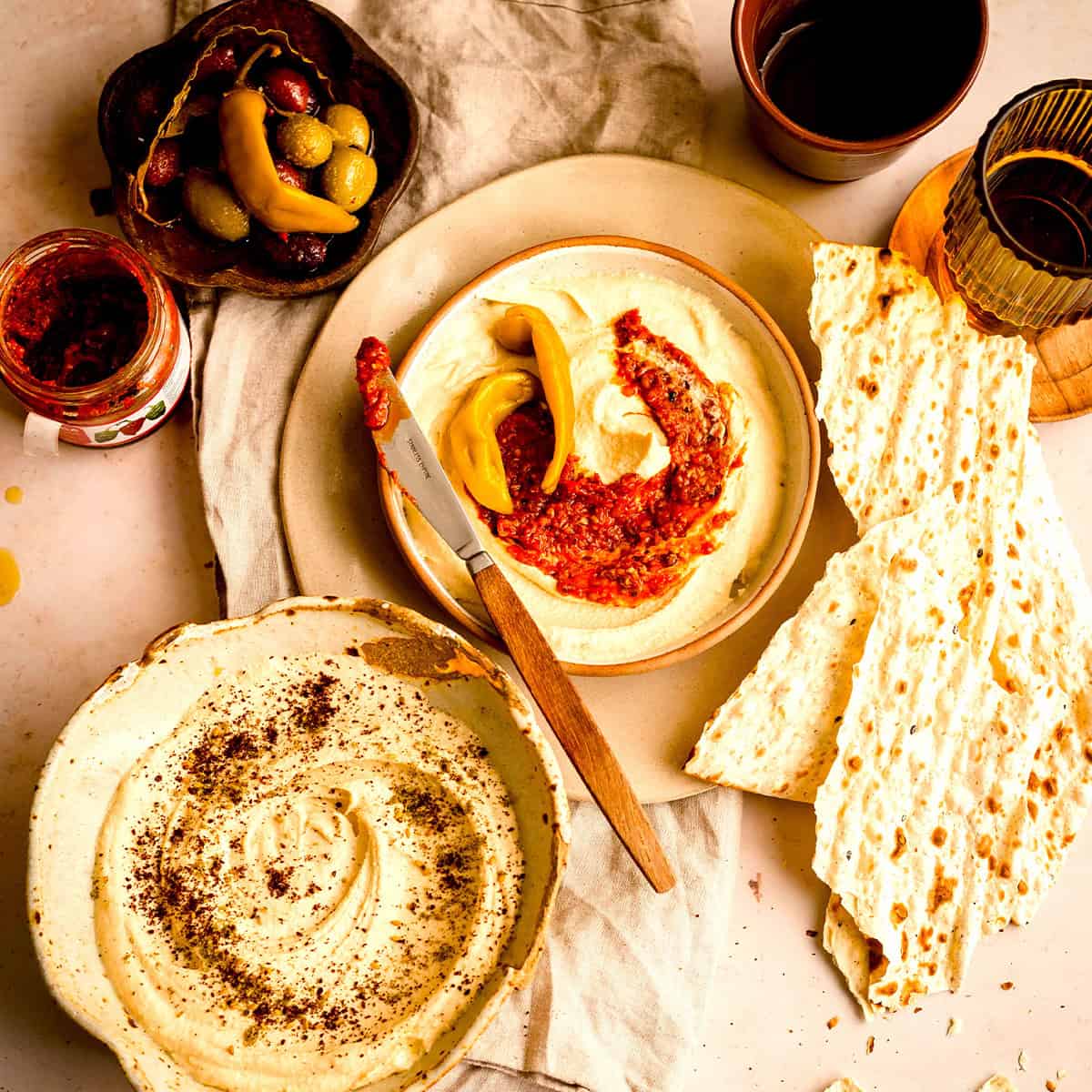
The trick is to cook the chickpeas until they are very soft, use good tahini, and blend everything thoroughly. A little bicarbonate of soda helps soften the chickpeas, while an ice cube added during blending helps create a lighter, creamier texture.
This is the hummus I make when I want the real thing: chickpeas, tahini, lemon, garlic and salt. No yoghurt, no unnecessary extras, just a handful of ingredients doing what they are supposed to do.
Jump to:
Recipe Snapshot
- Cuisine: Levantine / Middle Eastern
- Course: Dip, mezze, appetiser
- Prep time: 10 minutes, plus soaking time
- Cook time: 45-90 minutes, depending on the chickpeas
- Total time: Approximately 1 hour 40 minutes, excluding soaking
- Servings: 6
- Difficulty: Easy
- Dietary: Vegetarian, vegan, dairy-free, gluten-free
Why You'll Love This Hummus
- Properly creamy: Cooking dried chickpeas until very soft makes a real difference to the final texture.
- Full of flavour: Tahini brings nuttiness, lemon adds brightness and garlic gives it a little bite.
- Simple ingredients: You do not need yoghurt, cream or a long list of additions.
- Easy to customise: Adjust the lemon, garlic and salt to suit your taste.
- Useful to have in the fridge: Serve it with pita, vegetables, grilled meats, falafel or a mezze spread.
What Is Hummus?
Hummus, also spelt houmous, is a chickpea and tahini dip associated particularly with the Levant and enjoyed throughout the Middle East and beyond.
The name comes from the Arabic word for chickpeas. Traditionally, hummus is made by blending cooked chickpeas with tahini, lemon juice, garlic and salt. Olive oil is often used for serving, although it is not essential to the hummus itself.
There are many regional and household variations, including differences in texture, the balance of lemon and tahini, and how the finished dish is garnished. This recipe keeps the ingredients simple and focuses on the chickpeas and tahini.
Ingredients
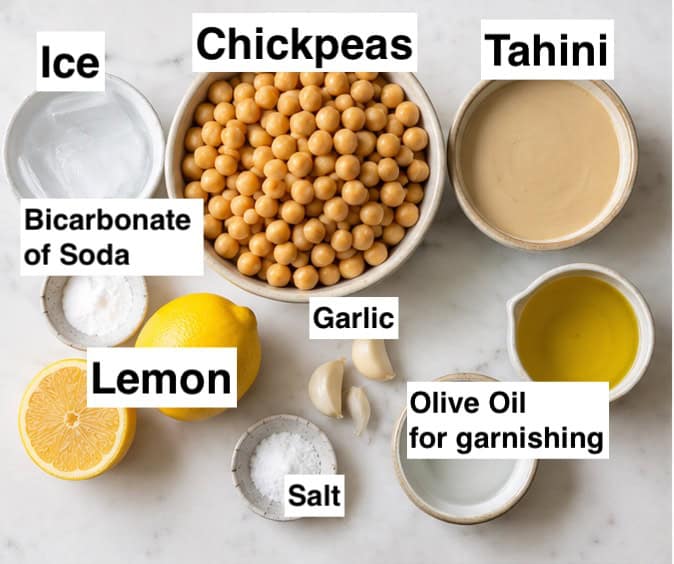
For the hummus
- 200g dried chickpeas: Dried chickpeas give you control over how soft they become. They need soaking and cooking before blending.
- 1 teaspoon bicarbonate of soda: Bicarbonate of soda, called baking soda in the US, helps soften the chickpeas during cooking. Use it in the cooking water, not as a substitute for the chickpeas.
- 75 - 120g tahini: Choose a smooth, pourable tahini made from sesame seeds. Stir it well before measuring because the oil can separate in the jar.
- 60ml fresh lemon juice: Freshly squeezed lemon gives the hummus its characteristic brightness. Start here and adjust to taste.
- 1 small garlic clove: One small clove gives a balanced garlic flavour without overwhelming the tahini. Use less if your garlic is particularly strong.
- 1 teaspoon fine salt: This is a starting point. Adjust after blending, as tahini and chickpeas vary.
- 1 ice cube: Blend this with the hummus to help create a light, smooth texture. You can also use a tablespoon or two of very cold water if needed.
To serve (optional)
- Extra-virgin olive oil
- A few cooked chickpeas
- Chopped parsley
- Paprika or ground cumin
- Warm pitta bread
How to Make Authentic Hummus
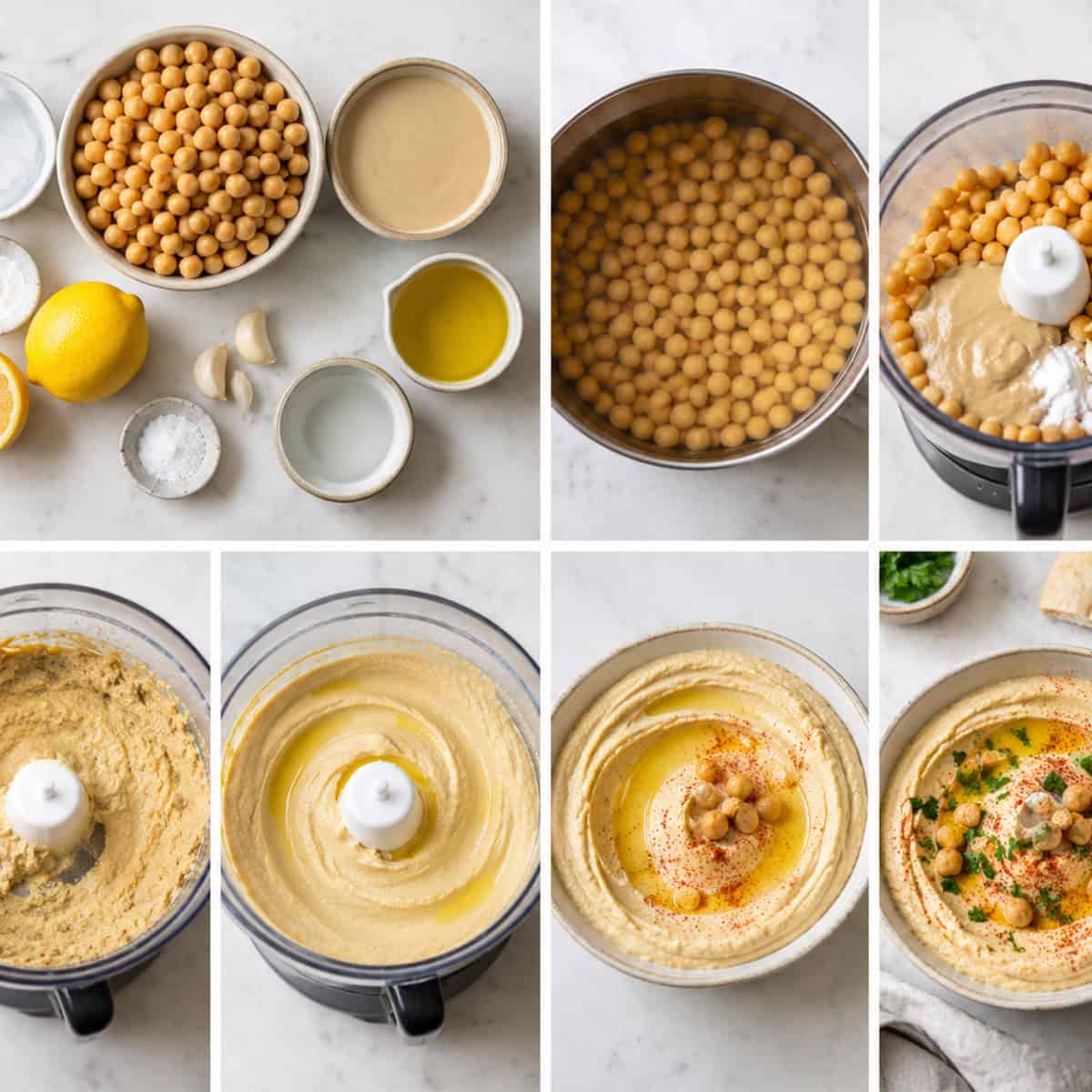
1. Soak the chickpeas
Place the dried chickpeas in a large bowl and cover with plenty of cold water. Leave to soak for 8-12 hours, or overnight.
They will expand as they absorb the water, so make sure the bowl is large enough. Drain and rinse thoroughly before cooking.
2. Cook the chickpeas with bicarbonate of soda
Place the soaked chickpeas in a large saucepan and cover generously with fresh water. Add the bicarbonate of soda and bring to the boil.
Reduce the heat and simmer until the chickpeas are extremely tender. This can take around 45-90 minutes, depending on their age and how long they were soaked.
For particularly smooth hummus, the chickpeas should crush easily between your fingers. They need to be softer than you would normally cook chickpeas for a salad.
Skim away any foam that rises to the surface. Drain the chickpeas, reserving a little cooking liquid in case you need it to adjust the consistency.
3. Blend the tahini and lemon
Add the tahini and lemon juice to a food processor. Blend for about 30-60 seconds until the mixture becomes pale and creamy.
It may thicken at first. This is normal.
4. Add the garlic and salt
Add the garlic and salt. Blend again until evenly combined.
Taste the mixture if you like, keeping in mind that the chickpeas will mellow the flavours once added.
5. Add the chickpeas
Add the cooked chickpeas to the food processor. Blend for 2-3 minutes, stopping occasionally to scrape down the sides.
If the hummus is too thick, add a small splash of reserved cooking liquid or cold water.
6. Add the ice cube
With the processor running, add the ice cube and blend until it has completely incorporated. Continue blending until the hummus is as smooth as your food processor allows.
Taste and adjust the salt, lemon juice or garlic. Add a little more cold water if needed, one tablespoon at a time.
7. Serve
Transfer the hummus to a shallow serving bowl. Use the back of a spoon to create a swirl, then drizzle with olive oil if desired.
Finish with a few whole chickpeas, parsley or a pinch of paprika. Serve with warm pita bread, crunchy vegetables or your favourite mezze dishes.
Tips for the Smoothest Hummus
Cook the chickpeas until very soft - This is one of the most important steps. Chickpeas that are still firm will produce a grainier hummus, regardless of how long you blend them.
Use good tahini - Tahini should taste nutty and pleasantly savoury, without excessive bitterness. A smooth, pourable variety is easiest to work with.
Blend for longer than you think - Give the food processor time to break down the chickpeas properly. Scrape the sides of the bowl as needed.
Add liquid gradually - The hummus will thicken as it blends. Add reserved cooking liquid or cold water in small amounts until you reach your preferred consistency.
Taste at the end - Chickpeas, tahini and lemons vary. Adjust the lemon and salt after blending rather than relying entirely on fixed measurements.
Do not overdo the garlic - Raw garlic becomes more pronounced as the hummus sits. One small clove is a good starting point.
Variations
- More lemon: Add an extra teaspoon or two of lemon juice for a brighter, sharper hummus.
- Extra tahini: Add another tablespoon for a richer sesame flavour.
- Garlic hummus: Add a little more garlic if you prefer a stronger flavour.
- Cumin hummus: Blend in a small pinch of ground cumin for a warm, earthy note.
- Tinned chickpea hummus: Use approximately 480g drained tinned chickpeas. Warm them in fresh water with a small pinch of bicarbonate of soda until very soft, then drain and proceed with the recipe. The texture may differ slightly from hummus made with dried chickpeas.
What to Serve with Hummus
Hummus is a natural part of a mezze spread, but it works just as well as an everyday dip or accompaniment.
Try it with:
- Warm pitta bread or homemade flatbread
- Falafel and chopped salad such as fattoush
- Cucumber, carrots, peppers and radishes
- Grilled chicken, lamb or kofta or doner kebabs
- Roasted vegetables
- Olives, pickles and other mezze dishes
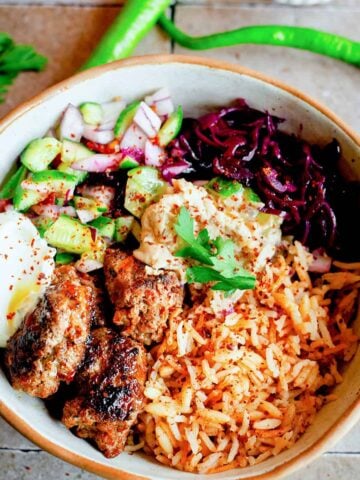
You can also spread it inside wraps and sandwiches or serve it alongside rice dishes for an easy lunch.
Storage
Transfer the hummus to a clean, airtight container and refrigerate promptly. It is best eaten within 3-4 days.
If it thickens in the fridge, stir in a little cold water before serving. Always use a clean spoon when serving and discard it if it develops an unusual smell, appearance or texture.
You can freeze hummus in a freezer-safe container for up to 3 months for best quality. Defrost it in the fridge, then stir or blend again to restore the texture.
Frequently Asked Questions
Can I make hummus without tahini?
Yes, but it will taste different. Tahini provides the distinctive sesame flavour and richness associated with traditional hummus. Without it, you can still make a chickpea dip using lemon, garlic and salt, but it will not have quite the same flavour.
Why add bicarbonate of soda to chickpeas?
Bicarbonate of soda helps soften chickpeas during cooking. Softer chickpeas are easier to blend and generally produce smoother hummus.
Why add an ice cube to hummus?
An ice cube introduces cold water as the hummus blends, helping create a lighter, creamier consistency. It is a useful technique, although the softness of the chickpeas and the quality of the blending matter just as much.
Can I use tinned chickpeas?
Yes. Drain and rinse them, then simmer in fresh water with a small pinch of bicarbonate of soda until they are very soft. This extra step can improve their texture before blending.
Why is my hummus grainy?
The chickpeas may not have cooked long enough, or the mixture may need more blending. Cook the chickpeas until they crush easily between your fingers and blend for several minutes, adding a little liquid if necessary.
Why does my hummus taste bitter?
The tahini may be naturally bitter, particularly if it is made from more strongly flavoured sesame seeds. Garlic can also become overpowering. Try a different tahini, check the balance of lemon and salt, and avoid adding too much garlic.
Is hummus vegan and gluten-free?
Traditional hummus made with chickpeas, tahini, lemon, garlic and salt is naturally vegan and gluten-free. Check ingredient labels if you are using packaged products, and serve with suitable accompaniments.
Can I make hummus ahead of time?
Yes. You can make it a day ahead and keep it covered in the fridge. The flavour will develop as it rests, although the texture may thicken slightly.
A Note on Authenticity
There is no single recipe that represents every household or region. Some cooks use more tahini, others prefer a stronger lemon flavour, and serving traditions vary. This recipe follows the classic chickpea, tahini, lemon and garlic combination, with bicarbonate of soda and an ice cube used to help achieve a particularly smooth texture.
Once you have the basic method down, you can adjust the seasoning to make it your own.
More Dip Recipes:
Muhammara - Red Pepper and Walnut Dip
Middle Eastern Olive and Zataar Dipping Oil
Zhug (Zhoug) Recipe - Authentic Yemeni Green Chili Sauce
Rate and Leave a comment
Did you make this recipe? i'd love to hear about it! did you try any variations? if you loved this recipe/tried any variations/have some top tips, please leave a star rating and comment below. Your reviews make our day and your tips help others to find our recipes and enjoy them too! you can also follow us on instagram and subscribe to our newsletter to get our latest recipes.
📖 Recipe

Authentic Hummus (Smooth, Creamy Homemade Hummus)
Ingredients
- 200 g dried chickpeas
- 1 teaspoon bicarbonate of soda for cooking
- 75 - 120 g tahini
- 60 ml fresh lemon juice
- 1 small garlic clove
- 1 teaspoon fine salt or to taste
- 1 ice cube
Instructions
Soak the chickpeas
- Place the dried chickpeas in a large bowl and cover with plenty of cold water. Leave to soak for 8-12 hours, or overnight.
- They will expand as they absorb the water, so make sure the bowl is large enough. Drain and rinse thoroughly before cooking.
Cook the chickpeas with bicarbonate of soda
- Place the soaked chickpeas in a large saucepan and cover generously with fresh water. Add the bicarbonate of soda and bring to the boil.
- Reduce the heat and simmer until the chickpeas are extremely tender. This can take around 45-90 minutes, depending on their age and how long they were soaked.
- For particularly smooth hummus, the chickpeas should crush easily between your fingers. They need to be softer than you would normally cook chickpeas for a salad.
- Skim away any foam that rises to the surface. Drain the chickpeas, reserving a little cooking liquid in case you need it to adjust the consistency.
Blend the tahini and lemon
- Add the tahini and lemon juice to a food processor. Blend for about 30-60 seconds until the mixture becomes pale and creamy.
- It may thicken at first. This is normal.
Add the garlic and salt
- Add the garlic and salt. Blend again until evenly combined.
- Taste the mixture if you like, keeping in mind that the chickpeas will mellow the flavours once added.
Add the chickpeas
- Add the cooked chickpeas to the food processor. Blend for 2-3 minutes, stopping occasionally to scrape down the sides.
- If the hummus is too thick, add a small splash of reserved cooking liquid or cold water.
Add the ice cube
- With the processor running, add the ice cube and blend until it has completely incorporated. Continue blending until the hummus is as smooth as your food processor allows.
- Taste and adjust the salt, lemon juice or garlic. Add a little more cold water if needed, one tablespoon at a time.
Serve
- Transfer the hummus to a shallow serving bowl. Use the back of a spoon to create a swirl, then drizzle with olive oil if desired.
- Finish with a few whole chickpeas, parsley or a pinch of paprika. Serve with warm pita bread, crunchy vegetables or your favourite mezze dishes.
Notes
Tips for the Smoothest Hummus
Cook the chickpeas until very soft - This is one of the most important steps. Chickpeas that are still firm will produce a grainier hummus, regardless of how long you blend them. Use good tahini - Tahini should taste nutty and pleasantly savoury, without excessive bitterness. A smooth, pourable variety is easiest to work with. Blend for longer than you think - Give the food processor time to break down the chickpeas properly. Scrape the sides of the bowl as needed. Add liquid gradually - The hummus will thicken as it blends. Add reserved cooking liquid or cold water in small amounts until you reach your preferred consistency. Taste at the end - Chickpeas, tahini and lemons vary. Adjust the lemon and salt after blending rather than relying entirely on fixed measurements. Do not overdo the garlic - Raw garlic becomes more pronounced as the hummus sits. One small clove is a good starting point.Variations
- More lemon: Add an extra teaspoon or two of lemon juice for a brighter, sharper hummus.
- Extra tahini: Add another tablespoon for a richer sesame flavour.
- Garlic hummus: Add a little more garlic if you prefer a stronger flavour.
- Cumin hummus: Blend in a small pinch of ground cumin for a warm, earthy note.
- Tinned chickpea hummus: Use approximately 480g drained tinned chickpeas. Warm them in fresh water with a small pinch of bicarbonate of soda until very soft, then drain and proceed with the recipe. The texture may differ slightly from hummus made with dried chickpeas.
What to Serve with Hummus
Hummus is a natural part of a mezze spread, but it works just as well as an everyday dip or accompaniment. Try it with:- Warm pitta bread or homemade flatbread
- Falafel and chopped salad such as fattoush
- Cucumber, carrots, peppers and radishes
- Grilled chicken, lamb or kofta or doner kebabs
- Roasted vegetables
- Olives, pickles and other mezze dishes


Leave a Reply