
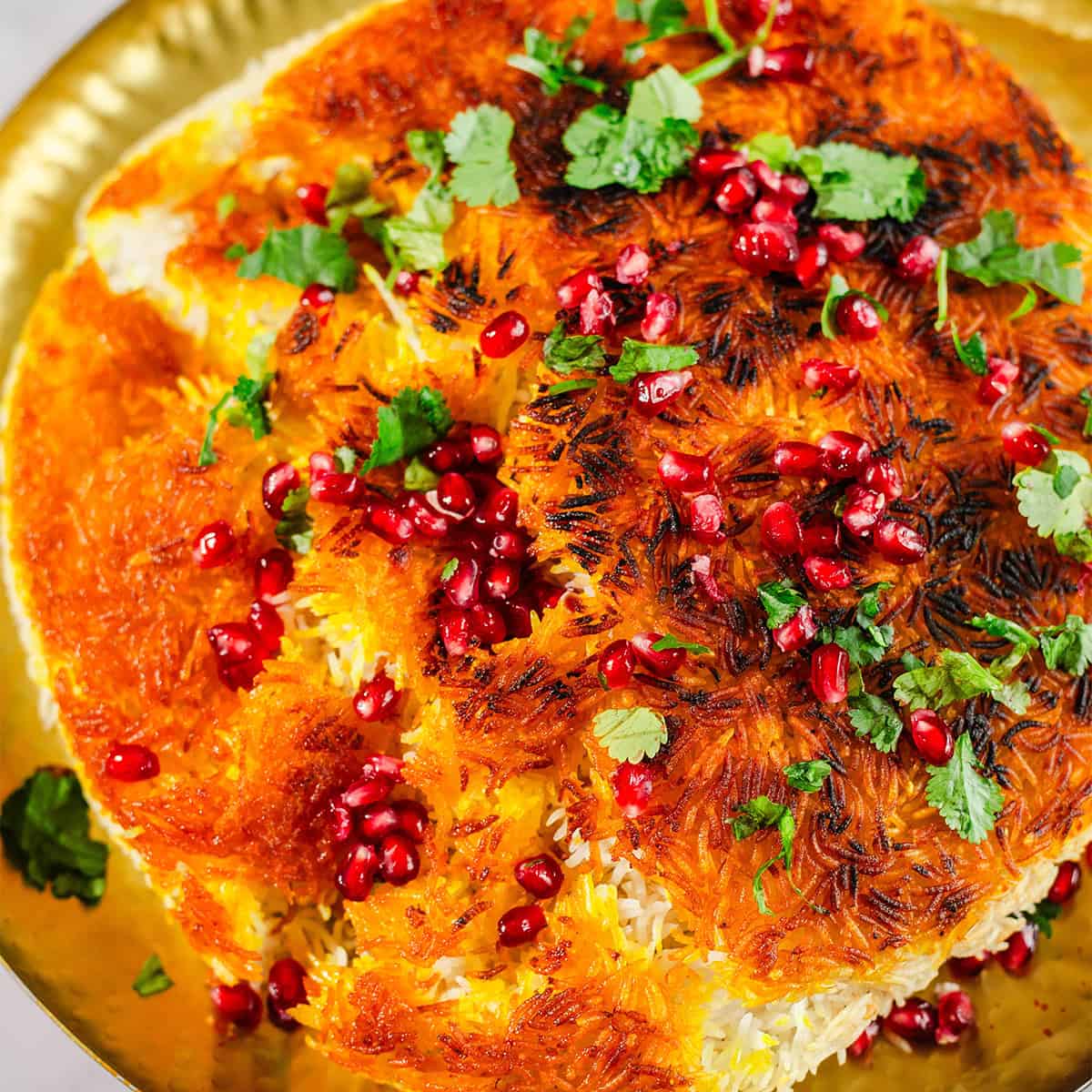
If there's one thing guaranteed to cause a polite scramble around the table, it's tahdig. That gloriously golden, crunchy crust hiding at the bottom of a pot of Persian rice is the kind of food that makes people 'just have a little taste' then mysteriously go back for more. Crisp on the outside, fluffy underneath, and infused with buttery, saffron-scented goodness, tahdig turns plain rice into something wildly addictive. Today I'm showing you how to make it at home. You don't need any special equipment and you will be rewarded with that deeply satisfying crack when you break into it. Trust me, this is rice…but not as you know it.
Jump to:
Golden Tahdig - Persian Crispy Rice
If you've ever been to a Persian table, you already know Tahdig disappears fast.
This golden, crackly layer of rice from the bottom of the pot isn't just a side dish, it's the prize. The thing people politely negotiate over and not-so-politely steal seconds of. Crispy yet tender, fragrant with saffron and turmeric, Tahdig is completely unforgettable.
This version is authentic, approachable, and tested for consistency, so you get that signature crunch without stress. Whether this is your first time making Tahdig or you're refining your technique, this recipe delivers.
Tahdig means crust/bottom of the pot and Chelo refers to the streamed rice - Chelo Ba Tahdig.
The name refers to the crust that is formed at the bottom of the pot in this recipe. Underneath that beautiful crust lies the most beautiful buttery saffron infused rice. The pot is then flipped over so the crispy layer sits on top of the fluffy rice underneath.
There are a variety of ways to make this recipe and the one I will be sharing in my next Tahdig post is one that has a potato layer at the bottom! Some have Lavash at the bottom. I will be sharing that version too. I love Persian food and for me, the books of Najmieh Batmanglij are seriously amongst the best cook books I have ever come across especially Food of Life.
What Is Tahdig? (A Little History)
Tahdig literally means "bottom of the pot" in Persian. It dates back centuries and is a staple of Iranian home cooking, evolving into an art form with countless regional variations.
Traditionally, Tahdig was created as a happy accident, rice crisping at the bottom of the pot. Today, it's intentional, celebrated, and often the most anticipated part of the meal.
Ingredients for Perfect Tahdig
Tahdig uses very few ingredients, which means each one matters.

White Rice
Use long-grain basmati rice for best results. Its low starch content allows the grains to stay fluffy while the base crisps beautifully.
Turmeric
Adds warmth, color, and subtle earthiness. Turmeric also helps create that signature golden hue at the base.
Saffron
Optional, but highly recommended. Saffron adds aroma, richness, and depth that elevates Tahdig from simple to spectacular. A staple of the Persian pantry.
Salt
Essential for seasoning the rice properly, don't under-salt, as bland rice dulls the final dish.
Oil or Butter
Creates the crisp crust. A neutral oil works well, while butter adds richness.
How to Make Tahdig (Step-by-Step Overview)
Full instructions can be found in the recipe card at the bottom of the page:
Rinse the rice until the water runs clear to remove excess starch.
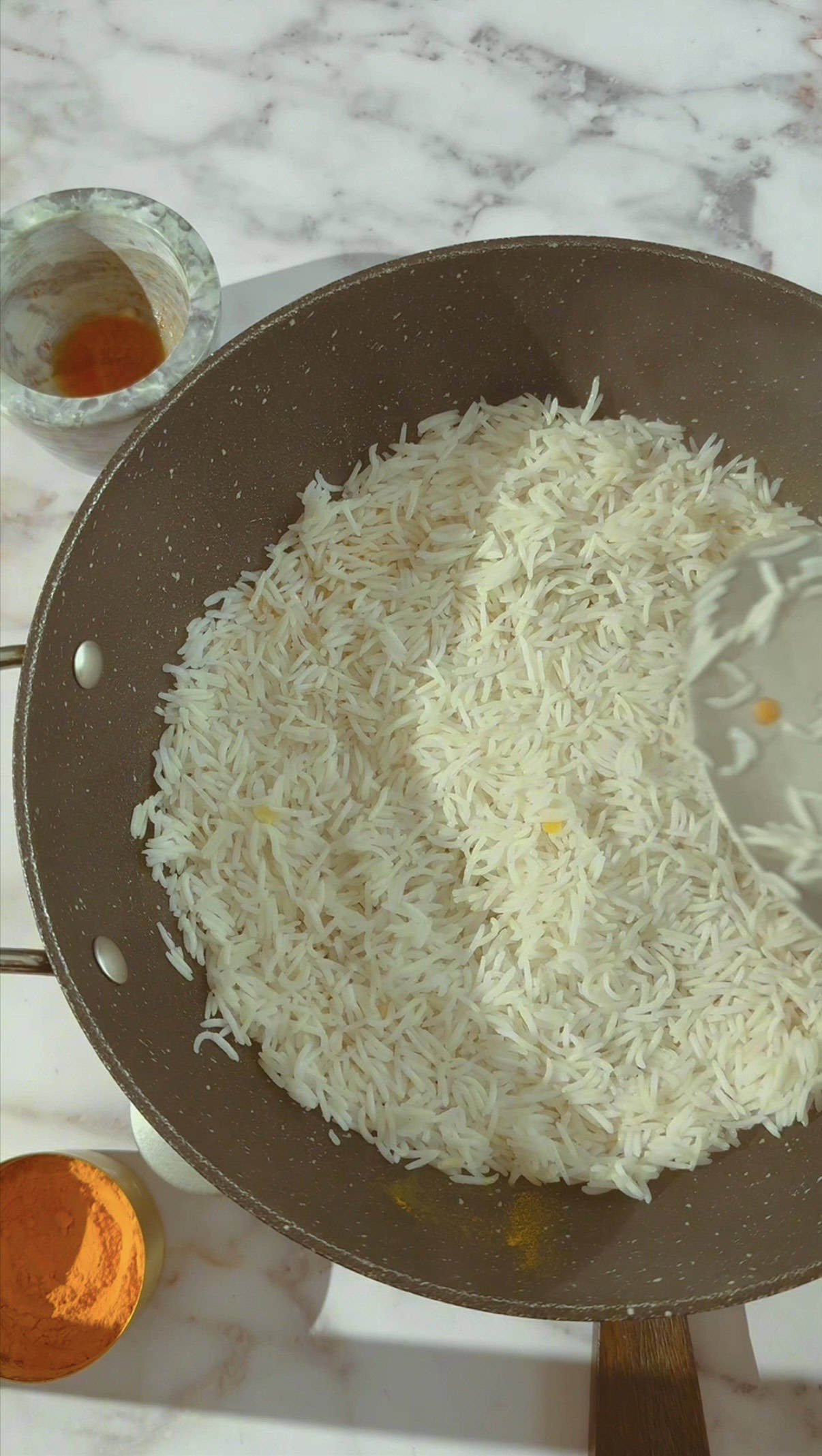
Parboil the rice in salted water until just tender on the outside but still firm inside.
Drain thoroughly in cold water as excess moisture is the enemy of crispiness.
Mix oil, turmeric, and saffron in the pot to form the base.
Layer the rice carefully, pressing down only the first layer to form the tahdig, while gently mounding the rest of the rice on top without compacting it.
Use the bottom of a wooden spoon or similar to create holes in the rice so the rice steams beautifully.
Cover the lid in a clean kitchen towel before adding to the pot.
Heat over high heat on the stovetop for 5 minutes. Steam slowly over low heat until a golden crust formFlip or lift carefully to reveal that iconic crispy Tahdig.



What to serve with Tahdig?
Tahdig can be served with a variety of Persian dishes.
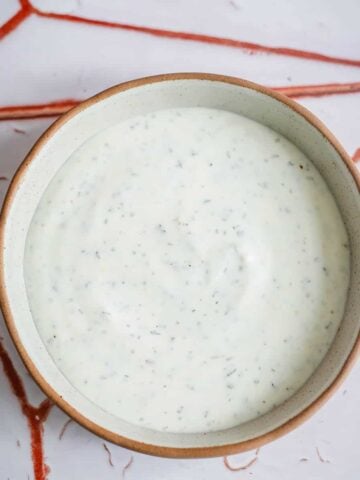
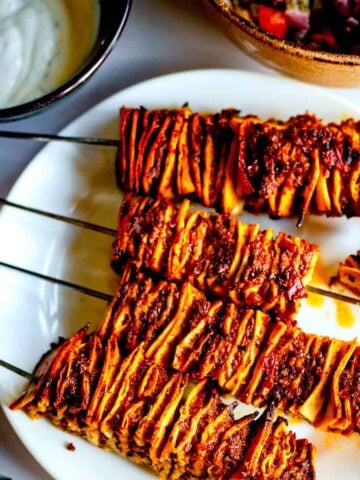
Try it with Ghormeh Sabzi (Persian Stew), Maast- o- Khair (Persian Yoghurt Cucumber Dip), Fesenjan, Khoresht Gheymey (Beef and Split Pea), Grilled Meats such as Joojeh Kebab and a Persian Salad such as this Shirazi Salad.
Tahdig Variations
- Yoghurt Tahdig: Mix yogurt with oil and rice for a thicker, tangier crust
- Potato Tahdig: Line the pot with thin potato slices before adding rice
- Lavash Tahdig: Use flatbread for an ultra-crispy base .
Top Tips for Foolproof Tahdig
- Always rinse your rice thoroughly until the water runs clear.
- Use low heat - patience creates crunch
- Don't peek too often; steam is essential
- Let the pot rest briefly before flipping
- If nervous, serve crust-side up directly from the pot.
Storage and Reheating
Tahdig is best served fresh. If you have leftovers, store them covered in the fridge with the crispy side facing up.
Tahdig will last in the fridge for up to 3 days.
Reheat in a non stick pan with a little oil, over medium heat, crispy side down until warmed through and crisped on the outside.
FAQs About Tahdig
Why is my Tahdig not crispy?
The heat is likely too high or the rice wasn't drained well enough. Low and slow heat is key.
What pot works best for Tahdig?
A non-stick or well-seasoned pot is ideal, especially for beginners.
Yes Tahdig is naturally gluten-free when made with rice and pure spices.
Serve with:
As well as the suggestions made above, you can also try it with stew like recipes such as:
Or Kebabs such as:
Kebab Koobideh - Persian Ground Lamb Kebabs
Adana Kebab - Turkish Lamb Kebabs
Rate and Leave a Comment
Did you make this recipe? i'd love to hear about it! did you try any variations? if you loved this recipe/tried any variations/have some top tips, please leace a star rating and comment below. Your reviews make our day and your tips help others to find our recipes and enjoy them too! you can also follow us on instagram and subscribe to our newsletter to get our latest recipes.
📖 Recipe

Golden Tahdig (Persian Crispy Rice) - Foolproof and Authentic
Ingredients
- 3 cups Rice Soaked in enough Water to cover it plus 2 inches, for 30 minutes
- 2 tablespoon Salt
- 3 tablespoon Oil Olive or neutral tasting oil
- ¾ teaspoon Turmeric Powder
- ½ teaspoon Saffron Thread Ground and Soaked in Ice, Water or Milk. Adjust quantity according to your taste
Instructions
- Rinse the rice until the water runs clear to remove excess starch.
- Add Rice and Salt to a large pot of boiling Water. Parboil the rice in the salted water until just tender on the outside but still firm inside. This takes 7-8 minutes. Test one rice grain between your fingers. It should break easily.
- Drain thoroughly in a colander. Excess moisture is the enemy of crispiness!
- Mix oil, turmeric, and saffron in a wide pot to form the base.
- Layer the rice carefully, pressing down only the first layer to form the tahdig, while gently mounding the remaining rice on top without compacting it. Cover the lid in a towel and close firmly.
- Use the bottom of a wooden spoon or similar to create steam holes in the rice.
- Heat over high heat for 5 minutes. Then steam slowly over low heat for 30-35 minutes until a golden crust forms.
- Remove the lid. Place a large platter or plate on top of the pot. Flip pot carefully into the platter to reveal that iconic crispy layer.
Notes
What to serve with Tahdig?
Tahdig can be served with a variety of Persian dishes.Try it with Ghormeh Sabzi (Persian Stew), Maast- o- Khair (Persian Yoghurt Cucumber Dip), Fesenjan, Khoresht Gheymey (Beef and Split Pea), Grilled Meats such as Joojeh Kebab and a Persian Salad such as this Shirazi Salad.
Tahdig Variations
- Yoghurt Tahdig: Mix yogurt with oil and rice for a thicker, tangier crust
- Potato Tahdig: Line the pot with thin potato slices before adding rice
- Lavash Tahdig: Use flatbread for an ultra-crispy base .
Top Tips for Foolproof Tahdig
- Always rinse your rice thoroughly until the water runs clear.
- Use low heat - patience creates crunch
- Don't peek too often; steam is essential
- Let the pot rest briefly before flipping
- If nervous, serve crust-side up directly from the pot.
Storage and Reheating
Tahdig is best served fresh. If you have leftovers, store them covered in the fridge with the crispy side facing up.Tahdig will last in the fridge for up to 3 days. Reheat in a non stick pan with a little oil, over medium heat, crispy side down until warmed through and crisped on the outside.
FAQs About Tahdig
Why is my Tahdig not crispy?
The heat is likely too high or the rice wasn’t drained well enough. Low and slow heat is key.What pot works best for Tahdig?
A non-stick or well-seasoned pot is ideal, especially for beginners. Yes Tahdig is naturally gluten-free when made with rice and pure spices. Serve with:As well as the suggestions made above, you can also try it with stew like recipes such as: Nan Gosht - Indian Lamb Curry Easy Boneless Chicken Curry Or Kebabs such as: Kebab Koobideh - Persian Ground Lamb Kebabs Adana Kebab - Turkish Lamb Kebabs

Roo says
This is the first time I managed to make Tahdig! Thankyou. 🙂
Safira says
That's great! So glad it worked for you. Safira x
Siman Halim says
This will be my first attempt to make the Tahdig for tomorrow’s our cooking club event (Persian theme). Wish me luck!! 😝🤭🫣
Safira says
Awwh that is great to hear. Hope it went well??