
Raw carrot and beetroot might not be the first vegetables you think of when planning a salad, but grate them together, add fresh herbs and a punchy citrus dressing, and you have something that deserves a place on the table in its own right.
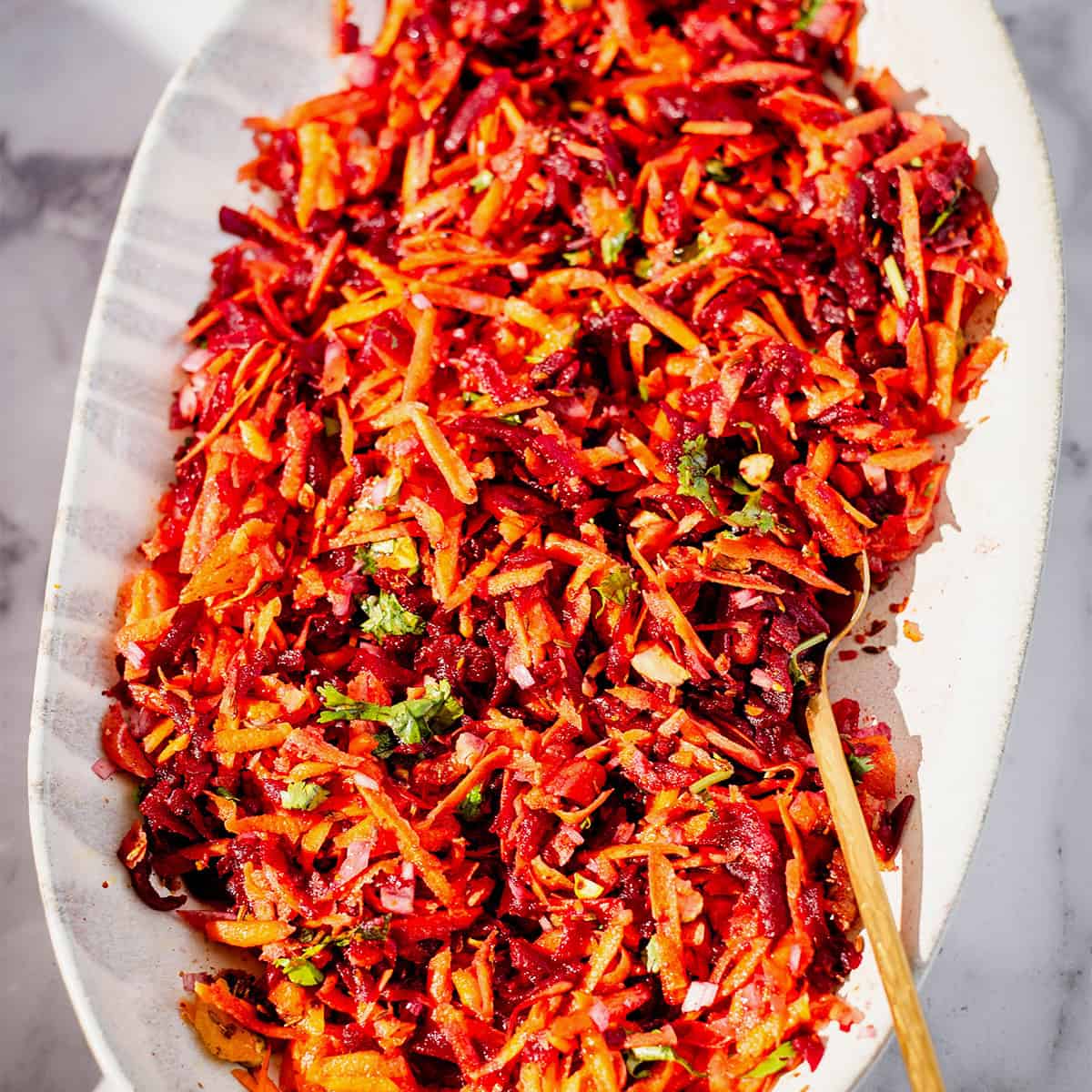
This Moroccan-inspired carrot and beetroot salad combines the natural sweetness of carrots and beetroot with golden raisins, toasted walnuts and a generous handful of fresh coriander and mint. The dressing brings everything together with orange, lemon, garlic, toasted cumin and ras el hanout, a fragrant spice blend that adds warmth without making the salad fiery.
There is plenty going on here, but none of it requires complicated preparation. The vegetables stay raw, giving the salad a lovely crunch, while the raisins soften slightly as they sit in the dressing. Toasted walnuts bring a nutty, slightly bitter contrast to the sweet fruit, and the red onion adds a savoury bite that stops everything from becoming too sweet.
I like salads that can hold their own alongside a main dish without requiring a separate cooking session. This one is particularly good with grilled chicken, fish, couscous or a table full of mezze. It is colourful enough for a gathering but straightforward enough to make for an ordinary evening meal.
Although the flavours take inspiration from Moroccan cooking, this is my own combination rather than a claim to a traditional Moroccan salad. It is a simple way to bring North African-inspired spices and citrus into an everyday recipe.
Jump to:
Recipe Snapshot
- Prep time: 20 minutes
- Cook time: 5 minutes
- Resting time: 15 minutes
- Total time: 40 minutes
- Servings: 4-6 as a side dish
- Course: Salad, side dish
- Cuisine: Moroccan-inspired
- Dietary: Vegetarian, gluten-free and easily adapted to be vegan
Why You'll Love This Recipe
It makes everyday vegetables more interesting
Carrots and beetroot are inexpensive, readily available and easy to prepare. Grating them creates a different texture from roasting or steaming, and the dressing gives them plenty of flavour without needing to cook them.
The flavours are sweet, savoury and fragrant
The orange and golden raisins bring sweetness, while lemon juice, garlic and red onion provide balance. Ras el hanout and cumin add warmth, and fresh mint and coriander keep the finished salad tasting fresh.
The textures work beautifully together
The vegetables remain crunchy, the raisins are chewy and the walnuts provide a toasted finish. Leaving the walnuts until the last minute means they retain their texture rather than softening in the dressing.
It works with so many meals
Serve it with grilled meats, fish, couscous, roasted vegetables or a selection of dips and flatbreads. It adds colour and freshness to richer dishes and can help turn a simple meal into something more complete.
It can be prepared ahead
The vegetables and dressing can be combined in advance, giving the flavours time to develop. Add the walnuts just before serving for the best texture.
A Little About the Flavours
Moroccan cooking is known for its use of aromatic spices, fresh herbs, citrus, preserved and dried fruits, and contrasting sweet and savoury flavours. The exact combinations vary between dishes, households and regions, but these ingredients offer plenty of inspiration for everyday cooking.
In this salad, ras el hanout provides the main spice profile. Its name is often translated as "head of the shop", referring to a spice seller's selection or blend. There is no single universal recipe for it, so the flavour can vary depending on the blend you use.
Toasted cumin adds an earthy, savoury note that works particularly well with raw carrots and beetroot. Cinnamon brings a little warmth, while orange and lemon brighten the dressing. Golden raisins reinforce the fruitiness without requiring a large amount of added sweetener.
The walnuts are an intentional contrast. Rather than adding another sweet ingredient, they contribute a deeper, slightly bitter flavour and a satisfying crunch.
The result is a salad that takes inspiration from North African flavour combinations while remaining easy to make with ingredients you can find in most supermarkets.
What Is Ras El Hanout?
Ras el hanout is a North African spice blend associated particularly with Moroccan cuisine. Depending on the blend, it can contain spices such as cumin, coriander, ginger, turmeric, cinnamon, cardamom, paprika and black pepper.
Some blends are relatively mild and fragrant, while others are more peppery or robust. This matters in a recipe like this because the spice blend is mixed into a fresh dressing rather than cooked into a sauce.
If you already have ras el hanout in your cupboard, this is a good way to use it beyond tagines and roasted vegetables. If you are buying it specifically for this recipe, choose a blend you enjoy the smell of, as its aroma will come through clearly in the finished salad.
Ingredients
For the Salad
Carrots: 4
Carrots form the sweet, crunchy base of the salad. Peel them and grate them coarsely so they retain some texture once dressed. Very finely grated carrots tend to become softer and can release more liquid.
Raw beetroot: 2
Raw beetroot has an earthy sweetness that pairs well with orange, cumin and warm spices. Peel and coarsely grate it in the same way as the carrots. It will colour the other ingredients as you toss the salad, giving everything a vivid magenta hue.
Red onion: ½
Red onion adds sharpness and a savoury contrast to the fruit. Finely chop it or slice it very thinly so that it distributes evenly through the salad. If your onion is particularly strong, use a little less.
Golden raisins: 1 handful
Golden raisins bring little bursts of sweetness and a chewy texture. Their colour also complements the orange dressing and grated vegetables. Ordinary raisins are a perfectly good substitute.
Fresh coriander: 1 large handful
Coriander adds a fresh, citrusy herbal flavour that works naturally with cumin and ras el hanout. Roughly chop the leaves and tender stems if they are in good condition.
Fresh mint: 1 small handful
Mint gives the salad a cooling freshness that balances the warmth of the spices. Chop most of the leaves and reserve a few for garnish.
Walnuts: 25g
Chopped walnuts bring crunch and a rich, toasted flavour. Toasting them briefly in a dry pan makes them more aromatic. Allow them to cool before adding them to the finished salad.
For the Dressing
Cumin seeds: 1 tbsp
Toasting whole cumin seeds releases their aroma and gives the dressing a deeper flavour than using the seeds straight from the jar. Lightly crush them after toasting to distribute their flavour throughout the dressing.
Olive oil: 3 tbsp
Extra virgin olive oil gives the dressing body and helps coat the grated vegetables. Use an olive oil whose flavour you enjoy, as it is not being cooked.
Honey or maple syrup: 1 tbsp
A small amount of sweetness rounds out the citrus and spices. Maple syrup is a straightforward substitute if you want to keep the salad vegan.
Garlic: 1 clove
Crushed garlic gives the dressing a savoury edge. Crush it finely so that it blends into the orange juice rather than leaving large, sharp pieces.
Oranges: zest and juice of 2 small oranges
Orange is a key flavour in this salad. The zest provides fragrant citrus oils, while the juice adds sweetness and acidity. Using small oranges keeps the quantity manageable, but add the juice gradually because the amount of liquid can vary.
Ras el hanout: 1 tbsp
This is the main spice blend in the dressing. It gives the salad its North African-inspired character and works particularly well with the sweetness of the carrots, beetroot and raisins.
Ground cinnamon: ¼ tsp
A little cinnamon complements the orange and raisins and adds warmth. Keep the amount modest so it supports the other spices rather than dominating the dressing.
Lemon juice: ½ lemon
Lemon provides a sharper acidity than orange and helps balance the sweetness. Taste the dressing before adding extra lemon, as the oranges themselves can vary in acidity.
Flaked sea salt: 1 tsp
Salt brings the flavours into focus. Flaked salt varies in size, so start with a little less if you prefer and adjust after tossing the salad.
Chilli flakes: a pinch, optional
A small pinch adds gentle heat. The salad is delicious without it, particularly if your ras el hanout already contains chilli or pepper.
How to Make Moroccan Carrot and Beetroot Salad
1. Toast the cumin seeds
Place the cumin seeds in a dry frying pan over a medium heat. Toast for 1-2 minutes, stirring frequently, until fragrant. Transfer to a pestle and mortar and lightly crush.
Avoid letting the seeds become too dark, as they can turn bitter.
2. Toast the walnuts
Add the chopped walnuts to the dry pan and toast for 2-4 minutes, stirring regularly, until fragrant and lightly golden. Transfer to a plate to cool.
Keep an eye on them throughout, as chopped walnuts can burn quickly.
3. Prepare the dressing
In a large bowl, whisk together the olive oil, honey or maple syrup, crushed garlic, orange zest, orange juice, ras el hanout, cinnamon, crushed cumin, lemon juice and salt.
Add the chilli flakes if using.
Taste the dressing before adding the vegetables. It should be fragrant, citrusy and gently spiced, with enough acidity to balance the natural sweetness of the carrots and raisins.
4. Grate the vegetables
Peel and trim the carrots and beetroot, then coarsely grate both using a box grater or the grating attachment of a food processor.
Finely chop or thinly slice the red onion. Add everything to a large mixing bowl along with the golden raisins, chopped coriander and mint.
5. Toss the salad
Pour the dressing over the vegetables and herbs. Toss thoroughly until everything is evenly coated.
If you prefer a less juicy salad, add the orange juice gradually rather than pouring it all in at once. The dressing should cling to the grated vegetables without leaving an excessive amount of liquid at the bottom of the bowl.
6. Leave to rest
Allow the salad to sit for at least 15 minutes before serving. This gives the raisins time to soften slightly and allows the dressing to mingle with the vegetables and herbs.
If preparing the salad in advance, cover and refrigerate it.
7. Finish and serve
Taste and adjust the seasoning if necessary. Add a little more lemon juice if the salad needs brightness, or a small pinch of salt if the flavours seem muted.
Scatter over the toasted walnuts and reserved mint leaves just before serving.
Recipe Testing Notes
Why use raw beetroot?
Raw beetroot is firm, earthy and slightly sweet. When coarsely grated, it creates a fresh, crunchy texture that works alongside the carrots. Cooking the beetroot would produce a softer salad and change the balance of textures, so raw beetroot is the best choice for this version.
Why toast the cumin seeds?
Whole cumin seeds develop a deeper, more rounded aroma when toasted briefly. Crushing them after toasting helps release their flavour while retaining a little texture. Ground cumin can be used if necessary, but it will give a slightly different result.
How much orange juice should you add?
The recipe uses the zest and juice of two small oranges. Even small oranges can vary in juiciness, so add the juice gradually. You want the dressing to coat the salad, not leave it sitting in a pool of liquid.
Why add the walnuts at the end?
The walnuts are at their best when freshly toasted and crunchy. Adding them immediately before serving prevents them from absorbing too much moisture from the dressing.
How long should the salad rest?
Fifteen minutes is a useful starting point. This gives the dressing time to mingle with the vegetables and the raisins time to soften slightly, without leaving the salad sitting for so long that the vegetables lose too much crunch.
Variations
Use regular raisins - Dark raisins work just as well as golden raisins. They will make the salad slightly darker but will not change the method.
Swap the walnuts - Chopped almonds or pistachios are good alternatives. Toast them briefly before serving to bring out their flavour.
Make it vegan - Replace the honey with maple syrup.
Add chickpeas - A drained tin of chickpeas makes the salad more substantial and turns it into a useful lunch option. Add them after draining and drying them well.
Adjust the heat - Leave out the chilli flakes for a mild salad or add a little more for extra warmth. Bear in mind that some ras el hanout blends are already peppery.
Change the herbs - Coriander and mint work particularly well here, but you can adjust their proportions to suit your taste. Keep the herbs fresh rather than dried.
Add Apple - Add some sliced or grated Apple.
What to Serve with Moroccan Carrot and Beetroot Salad
This salad works best alongside dishes that benefit from something fresh, crunchy and citrusy.
Grilled or roast chicken
Serve it with Moroccan-spiced chicken, grilled skewers or simply roasted chicken. The orange and spices complement savoury, charred flavours, while the raw vegetables provide a fresh contrast.
Grilled fish
The citrus dressing works well with grilled white fish or salmon. Serve with flatbreads or a simple grain dish for a complete meal.
Couscous and chickpeas
Pair the salad with fluffy couscous, chickpeas and extra fresh herbs. The combination makes a colourful vegetarian meal, with the salad providing crunch and acidity.
A mezze spread
Add hummus, warm flatbreads, olives and other dips for a sharing table. The salad brings colour and freshness to richer, creamier dishes.
Roasted vegetables
Serve alongside roasted cauliflower, aubergine or squash. The sweetness of roasted vegetables works well with the orange dressing and warm spices.
Storage and Make Ahead
Can you make it ahead?
Yes. You can prepare the salad up to 4 hours ahead, cover it and refrigerate it. The vegetables can also be grated in advance and stored separately from the dressing if you want to preserve as much crunch as possible.
Keep the toasted walnuts in a separate container and add them immediately before serving.
How long does it keep?
Store leftovers in an airtight container in the fridge and eat within 1-2 days. The vegetables will soften and release more liquid as they sit, and the walnuts will lose their crunch.
Can you freeze it?
Freezing is not recommended. Raw grated carrots and beetroot will lose their crisp texture when thawed, and the dressing may separate.
Can you prepare the dressing separately?
Yes. Whisk the dressing together and refrigerate it in a covered container for up to a day. Stir or whisk again before using, then toss with the vegetables shortly before serving.
Frequently Asked Questions
Can I use cooked beetroot instead of raw?
You can, but the texture will be different. Raw beetroot provides a firm crunch that complements the carrots and walnuts. Cooked beetroot will be softer and may release additional moisture into the salad.
Is this salad spicy?
It is warmly spiced rather than hot. Ras el hanout, cumin and cinnamon provide fragrance and depth. Chilli flakes are optional, and the heat will depend partly on the spice blend you use.
What can I use instead of ras el hanout?
You can make a simple alternative using ground cumin, coriander, ginger and paprika, with a little cinnamon. It will not taste exactly the same, as ras el hanout blends vary, but it will still give the dressing a warm, aromatic flavour.
Can I use ordinary oranges?
Yes. If your oranges are larger than expected, add the juice gradually and stop when you have enough dressing to coat the vegetables. Keep the zest for its fragrant citrus flavour.
Can I leave out the honey?
Yes. You can use maple syrup for a vegan version or leave out the sweetener if your oranges are particularly sweet. Taste the dressing before deciding whether it needs the extra sweetness.
Why does the salad need to rest before serving?
Resting gives the dressing time to coat the vegetables and allows the flavours to develop. The raisins also soften slightly as they absorb some of the moisture.
Is this salad suitable for meal prep?
It can be prepared ahead, although the texture is best on the day it is made. For meal prep, store the grated vegetables, dressing and walnuts separately, then combine them when you are ready to eat.
Can I serve this salad warm?
It is designed to be served cold or at room temperature. If serving alongside warm food, take it out of the fridge shortly before the meal, toss it again and add the walnuts at the end.
More Moroccan Recipes:
Moroccan Chicken with Preserved Lemon & Harissa
Moroccan Harira - Chickpea & Lentil Soup with lamb
Moroccan shakshuka - Shakshuka with Harissa
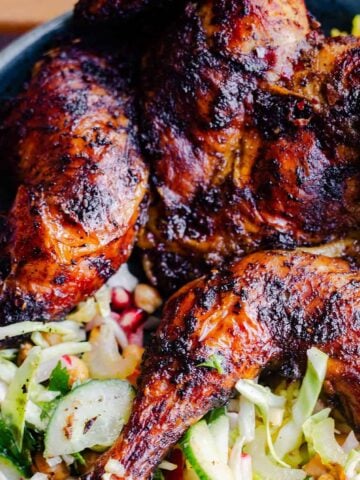
Harissa Spatchcock Chicken with Preserved Lemon
Rate and Leave a comment
Did you make this recipe? i'd love to hear about it! did you try any variations? if you loved this recipe/tried any variations/have some top tips, please leave a star rating and comment below. Your reviews make our day and your tips help others to find our recipes and enjoy them too!
you can also follow us on instagram and subscribe to our newsletter to get our latest recipes.
📖 Recipe
Moroccan Carrot and Beetroot Salad with Orange
Ingredients
For the Salad
- 4 carrots peeled and coarsely grated
- 2 raw beetroot peeled and coarsely grated
- ½ red onion finely chopped
- 1 handful golden raisins
- 1 large handful fresh coriander roughly chopped
- 1 small handful fresh mint chopped, plus a few leaves for garnish
- 25 g walnuts roughly chopped and toasted
For the Dressing
- 1 tablespoon cumin seeds
- 3 tablespoon olive oil
- 1 tablespoon honey or maple syrup
- 1 garlic clove crushed
- Zest and juice of 2 small oranges
- 1 tablespoon ras el hanout
- ¼ teaspoon ground cinnamon
- Juice of ½ lemon
- 1 teaspoon flaked sea salt or to taste
- Pinch of chilli flakes optional
Instructions
Toast the cumin seeds
- Place the cumin seeds in a dry frying pan over a medium heat. Toast for 1-2 minutes, stirring frequently, until fragrant. Transfer to a pestle and mortar and lightly crush.
- Avoid letting the seeds become too dark, as they can turn bitter.
Toast the walnuts
- Add the chopped walnuts to the dry pan and toast for 2-4 minutes, stirring regularly, until fragrant and lightly golden. Transfer to a plate to cool.
- Keep an eye on them throughout, as chopped walnuts can burn quickly.
Prepare the dressing
- In a large bowl, whisk together the olive oil, honey or maple syrup, crushed garlic, orange zest, orange juice, ras el hanout, cinnamon, crushed cumin, lemon juice and salt.
- Add the chilli flakes if using.
- Taste the dressing before adding the vegetables. It should be fragrant, citrusy and gently spiced, with enough acidity to balance the natural sweetness of the carrots and raisins.
Grate the vegetables
- Peel and trim the carrots and beetroot, then coarsely grate both using a box grater or the grating attachment of a food processor.
- Finely chop or thinly slice the red onion. Add everything to a large mixing bowl along with the golden raisins, chopped coriander and mint.
Toss the salad
- Pour the dressing over the vegetables and herbs. Toss thoroughly until everything is evenly coated.
- If you prefer a less juicy salad, add the orange juice gradually rather than pouring it all in at once. The dressing should cling to the grated vegetables without leaving an excessive amount of liquid at the bottom of the bowl.
Leave to rest
- Allow the salad to sit for at least 15 minutes before serving. This gives the raisins time to soften slightly and allows the dressing to mingle with the vegetables and herbs.
- If preparing the salad in advance, cover and refrigerate it.
Finish and serve
- Taste and adjust the seasoning if necessary. Add a little more lemon juice if the salad needs brightness, or a small pinch of salt if the flavours seem muted.
- Scatter over the toasted walnuts and reserved mint leaves just before serving.


Leave a Reply