
These Orange Date Scones are soft, buttery and packed with chopped dates, with plenty of fresh orange zest running through the dough.
They're the sort of thing I want with a cup of tea in the afternoon. Warm from the oven, split open and covered with butter, or served properly with jam and clotted cream.For a more traditional scone, try this Buttermilk Scone recipe.
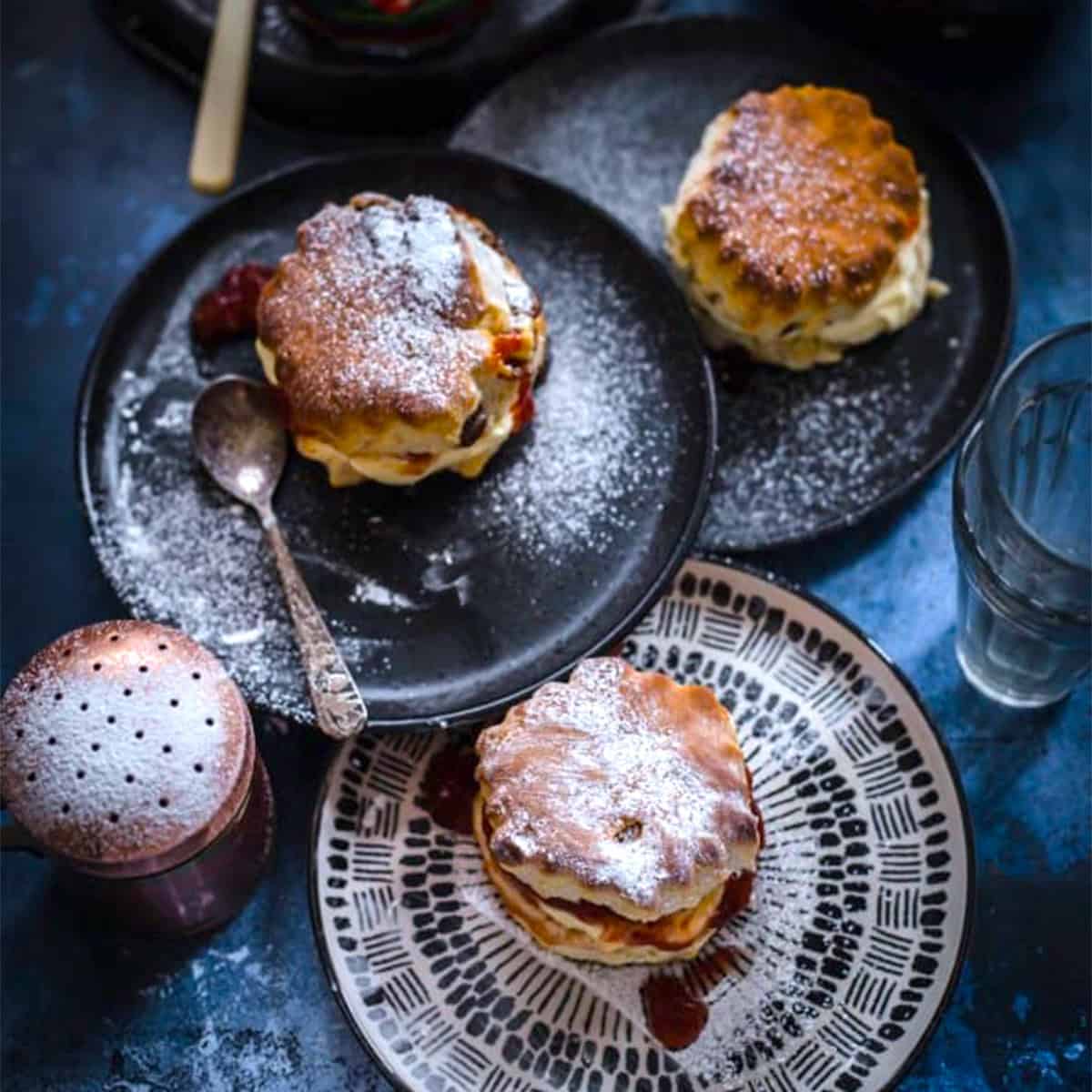
I first made date scones because I had far too many dates in the fridge after Ramadan. It seemed like a good problem to have, so I put them into a batch of scones. The dates worked ridiculously well.
I added orange zest because dates and orange are one of those combinations that just make sense. The orange cuts through the sweetness of the dates and gives the scones a lovely fresh flavour without making them taste like orange cake.
And, importantly, these don't need any complicated technique. Keep the butter cold, don't overwork the dough and you'll have golden, fluffy scones ready for tea.
Jump to:
Recipe Snapshot
Prep: 10 minutes
Cook: 15 minutes
Total: 25 minutes
Makes: 10 scones
Cuisine: British
Why you'll love these
Soft and fluffy: The key is handling the dough as little as possible.
Properly date-y: There are enough dates for you to actually get them in every bite.
Fresh orange flavour: Orange zest adds brightness without making these overly sweet.
Easy: No proving, chilling or complicated equipment.
Freezer friendly: Make a batch and save some for another day.
What are Orange Date Scones?
They're exactly what they sound like: classic British-style scones made with chopped dates and fresh orange zest.
The dates become soft and sticky as the scones bake, while the orange zest perfumes the dough. They sit somewhere between a traditional fruit scone and something a little more interesting.
And you don't need to add orange juice. Zest is enough. It gives you a concentrated orange flavour without adding extra liquid to the dough.
Ingredient Notes
For the scones
Self-raising flour: This gives the scones their lift and keeps the ingredient list simple.
Baking powder: A little extra lift helps give you tall, fluffy scones.
Caster sugar: Just enough sweetness for the dates without making these cake-like.
Salt: Don't skip it. It balances the sweetness and brings out the orange and date flavours.
Unsalted butter: Use cold butter. This helps create that light, tender texture.
Orange zest: Use fresh oranges and zest them before juicing. You want the fine outer orange layer, not the bitter white pith.
Dates: Use pitted dates and chop them quite finely. Smaller pieces distribute throughout the dough much better.
Egg: Adds richness and helps bind the dough.
Milk: Brings everything together and gives you a soft dough.
Egg: Used separately for brushing over the tops before baking.
Spices: Cardamom (Optional) and Mixed Spice
How to make Orange Date Scones
1. Prepare the oven
Preheat the oven to 200°C / 180°C Fan / Gas Mark 6.
Line a baking tray with baking paper.
2. Mix the dry ingredients
Add the self-raising flour, baking powder, spices, caster sugar and salt to a large bowl.
Mix well.
3. Rub in the butter
Cut the cold butter into small cubes and add it to the flour.
Rub the butter into the flour with your fingertips until the mixture resembles breadcrumbs.
You can also do this in a food processor with a few quick pulses.
Don't spend ages doing this. You just want the butter incorporated.
4. Add the dates and orange
Add the chopped dates and orange zest.
Give everything a quick mix so the dates are evenly distributed.
5. Add the wet ingredients
Whisk the egg and milk together in a separate jug.
Make a well in the centre of the flour mixture and pour in the milk and egg.
Use a butter knife to bring the dough together.
It should look a little rough. That's fine.
Do not knead it like bread.
6. Shape the dough
Tip the dough onto a lightly floured surface.
Gently bring it together with your hands, then pat or roll it out to around 2½ cm thick.
Use a round cutter to cut out the scones.
When cutting, press the cutter straight down and lift it back up. Don't twist it. Twisting can affect how the scones rise.
Bring the scraps together once and cut again.
Try not to keep rerolling the dough or you'll end up with tougher scones.
7. Glaze
Place the scones onto the lined baking tray.
Brush the tops with beaten egg.
Try to keep the egg glaze on the tops rather than letting it run down the sides, as this can stop the scones rising evenly.
8. Bake
Bake for 13-15 minutes, or until risen and golden on top.
Transfer to a wire rack and leave for a few minutes before serving.
How to get soft, fluffy scones
- There are really only a few things to remember.
- Keep the butter cold. Cold butter gives the scones a lighter texture.
- Don't overwork the dough. Once the liquid goes in, bring everything together gently. You don't need to knead it.
- Don't twist the cutter. Press straight down and lift.
- Don't keep rerolling the scraps. One reroll is plenty.
These little things make a surprisingly big difference.
What to serve with Orange Date Scones
The obvious answer is jam and clotted cream.
Or:
- Butter
- Orange marmalade
- Honey
- Date syrup
- Mascarpone
- Cream cheese
- And, obviously, a pot of tea.
Storage
Scones are best eaten on the day they're made, particularly while they're still slightly warm.
Once completely cool, store them in an airtight container for up to 3 days.
Warm them briefly before serving to bring back some of that soft texture.
Can you freeze Orange Date Scones?
Yes. These freeze really well.
Allow them to cool completely, then place them in a freezer-safe bag or airtight container.
Freeze for up to 3 months.
Defrost at room temperature, then warm in the oven at 150°C / 130°C Fan for 5-10 minutes.
You can also warm an individual defrosted scone in the microwave for around 10-20 seconds.
Can I make these ahead?
Yes. You can make and cut the scones, then cover them and keep them chilled until you're ready to bake.
For the best rise, keep the butter and dough cold and bake them while the dough is still chilled.
Frequently Asked Questions
Why are my scones hard?
The most common culprit is overworking the dough. Once you've added the milk and egg, mix only until the dough comes together. Adding too much flour while shaping can also make them dry.
Why didn't my scones rise?
Make sure your self-raising flour and baking powder are fresh. Also check that you aren't twisting the cutter when cutting the dough.
Overworking the dough can also result in flatter, tougher scones.
Can I make these without dates?
Absolutely. Leave the dates out for a simple orange scone, or replace them with chopped dried apricots, raisins or sultanas.
Do I need to use orange zest?
I would. It's what gives these their orange flavour without adding unnecessary liquid to the dough.
Jam or cream first?
I am staying out of this one.
Put them on in whatever order makes you happy.
Can I use other dates?
Yes. Medjool dates work particularly well because they're soft and sticky, but ordinary pitted dates are absolutely fine.
If your dates are particularly large or sticky, chop them into small pieces so they don't clump together in the dough.
Can I use orange juice?
I wouldn't. The zest gives you a concentrated orange flavour without changing the liquid balance of the recipe.
If you want even more orange flavour, use a little more zest rather than adding juice.
More favourite bakes:
Chocolate Orange and Honey Cake – Dairy Free, Gluten Free
One Bowl Banana Cake with Chocolate and Caramel
Rate and Leave a comment
Did you make this recipe? i'd love to hear about it! did you try any variations? if you loved this recipe/tried any variations/have some top tips, please leave a star rating and comment below. Your reviews make our day and your tips help others to find our recipes and enjoy them too!
you can also follow us on instagram and subscribe to our newsletter to get our latest recipes.
📖 Recipe

Orange and Date Scones
Ingredients
- 250 g Self Raising Flour
- 1 teaspoon Baking Powder
- ¼ teaspoon Ground Cardamom Optional
- 1 teaspoon Mixed Spice Optional
- 35 g Caster Sugar
- Pinch Salt
- 50 g Butter Cold, Unsalted
- 2 Oranges Zest only
- 50 g Dates Stones removed and chopped finely
- 1 Egg
- 125 ml Milk
Glaze
- 1 Egg Beaten
To Serve
- Jam
- Clotted Cream
Instructions
- Preheat the oven to 200°C / 180°C Fan / Gas Mark 6 and line a baking tray with baking paper.
- Add the flour, baking powder, cardamom, mixed spice, sugar and salt to a large bowl.
- Rub in the cold butter until the mixture resembles breadcrumbs.
- Stir through the orange zest and chopped dates.
- Whisk the egg and milk together. Make a well in the centre of the flour and pour in the liquid.
- Use a butter knife to gently bring the mixture together into a soft dough.
- Tip onto a lightly floured surface and gently roll or pat to around 2½ cm thick.
- Cut out 10 rounds using a scone cutter, pressing straight down without twisting.
- Place onto the prepared tray and brush the tops with beaten egg.
- Bake for 13-15 minutes, until risen and golden.
- Cool briefly on a wire rack and serve warm with jam and clotted cream.
Notes
How to get soft, fluffy scones
- There are really only a few things to remember.
- Keep the butter cold. Cold butter gives the scones a lighter texture.
- Don't overwork the dough. Once the liquid goes in, bring everything together gently. You don't need to knead it.
- Don't twist the cutter. Press straight down and lift.
- Don't keep rerolling the scraps. One reroll is plenty.
What to serve with Orange Date Scones
The obvious answer is jam and clotted cream. Or:- Butter
- Orange marmalade
- Honey
- Date syrup
- Mascarpone
- Cream cheese
- And, obviously, a pot of tea.
Storage
Scones are best eaten on the day they're made, particularly while they're still slightly warm. Once completely cool, store them in an airtight container for up to 3 days. Warm them briefly before serving to bring back some of that soft texture.Can you freeze Orange Date Scones?
Yes. These freeze really well. Allow them to cool completely, then place them in a freezer-safe bag or airtight container. Freeze for up to 3 months. Defrost at room temperature, then warm in the oven at 150°C / 130°C Fan for 5–10 minutes. You can also warm an individual defrosted scone in the microwave for around 10–20 seconds.Can I make these ahead?
Yes. You can make and cut the scones, then cover them and keep them chilled until you're ready to bake. For the best rise, keep the butter and dough cold and bake them while the dough is still chilled.Frequently Asked Questions
Why are my scones hard?
The most common culprit is overworking the dough. Once you've added the milk and egg, mix only until the dough comes together. Adding too much flour while shaping can also make them dry.Why didn't my scones rise?
Make sure your self-raising flour and baking powder are fresh. Also check that you aren't twisting the cutter when cutting the dough. Overworking the dough can also result in flatter, tougher scones.Can I make these without dates?
Absolutely. Leave the dates out for a simple orange scone, or replace them with chopped dried apricots, raisins or sultanas.Do I need to use orange zest?
I would. It's what gives these their orange flavour without adding unnecessary liquid to the dough.Jam or cream first?
I am staying out of this one.Put them on in whatever order makes you happy.
Can I use other dates?
Yes. Medjool dates work particularly well because they're soft and sticky, but ordinary pitted dates are absolutely fine.If your dates are particularly large or sticky, chop them into small pieces so they don't clump together in the dough.
Can I use orange juice?
I wouldn't. The zest gives you a concentrated orange flavour without changing the liquid balance of the recipe.If you want even more orange flavour, use a little more zest rather than adding juice.
Nutrition

Leave a Reply