
Fattet hummus is a Levantine dish made with layers of crispy toasted or fried pitta bread, warm chickpeas and a creamy tahini, garlic and yoghurt sauce. The layers are finished with toasted pine nuts, pomegranate seeds, spices and a drizzle of hot ghee or olive oil. Fattet Hummus is a popular Levantine dish, particularly in Lebanon, Palestine and Syria, and is enjoyed in various forms across the wider Arab world.
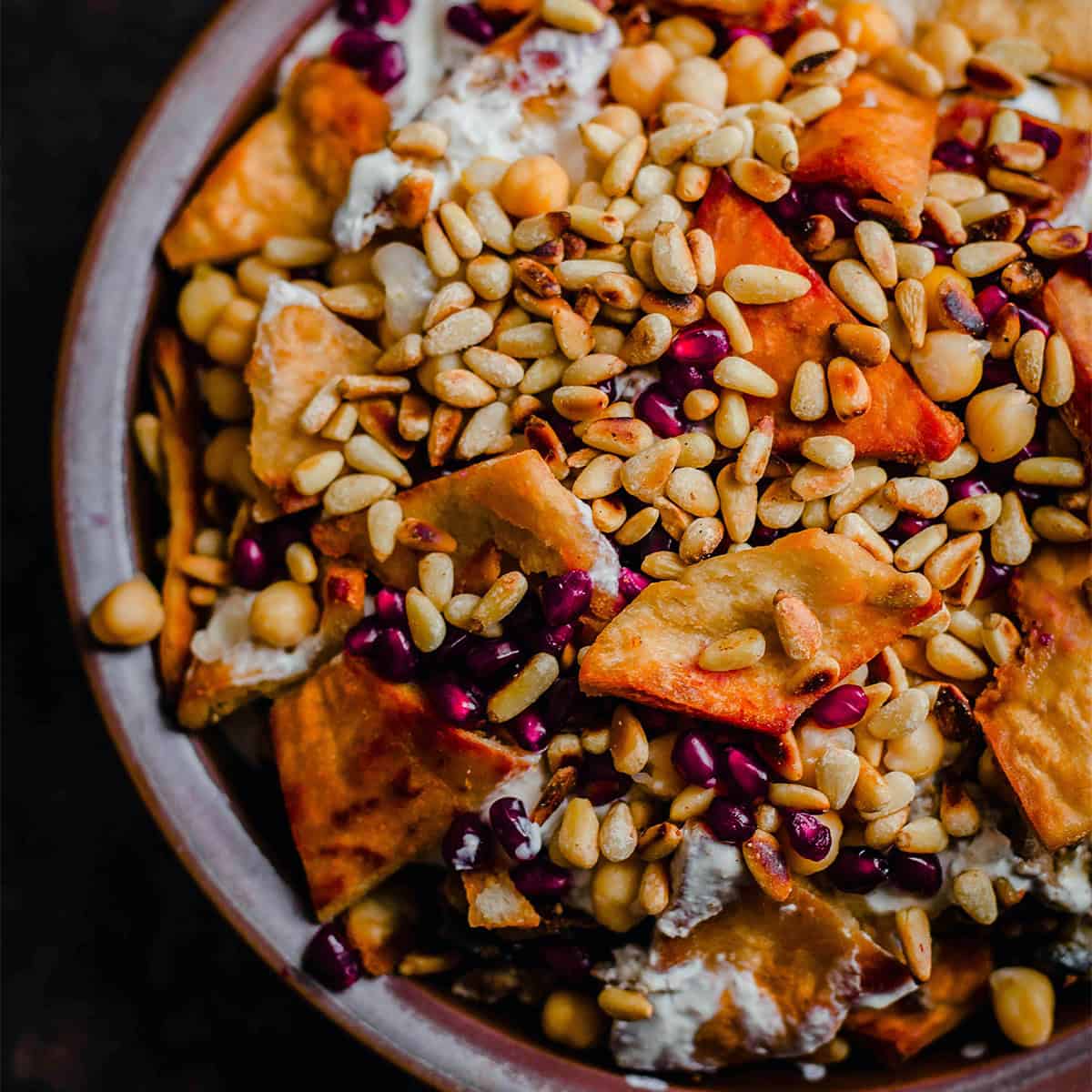
The combination of textures is what makes this dish so good. You have crisp pieces of pitta, soft chickpeas and a tangy garlic yoghurt sauce that brings everything together. As the sauce settles into the bread, it softens slightly while still retaining some texture.
There are lots of variations of fattet hummus across the Levant. Some recipes use a simple garlic yoghurt, while others include tahini for extra richness. I also like adding finely chopped green chilli, inspired by Joudie Kalla's version, which brings a little heat to the creamy chickpea mixture.
This is a lovely dish to serve for breakfast or brunch, particularly as part of a larger spread of Middle Eastern mezze. It is easy to prepare, uses simple ingredients and is best brought straight to the table once assembled.
Jump to:
Recipe Snapshot
- Cuisine: Middle Eastern, Levantine
- Servings: 4
- Prep time: 15 minutes
- Cook time: 10 minutes
- Total time: 25 minutes
- Diet: Vegetarian
Why You'll Love This Recipe
- A lovely combination of textures - Crispy pitta, warm chickpeas and creamy yoghurt make every mouthful different.
- Simple ingredients - Chickpeas, tahini, yoghurt, garlic and lemon form the base of the dish.
- Easy to adapt - Add green chilli, change the nuts or adjust the seasoning to suit your taste.
- Made for sharing - Assemble everything on one large platter and bring it straight to the table.
Ingredient Notes
Pitta bread - Thin pitta breads work particularly well because they crisp up quickly in the oven. Cut them into small, bite-sized squares so they are easy to scoop up with the chickpeas and yoghurt.
Chickpeas - A tin of chickpeas keeps preparation simple. Warm them in their liquid before blending some into the yoghurt mixture. Reserve a little of the whole chickpeas for the topping.
Tahini - Adds a nutty flavour and richness to the yoghurt mixture. Stir the tahini well before measuring.
Plain yoghurt - Regular plain yoghurt gives you a lighter, looser sauce. Greek yoghurt is thicker, so you may need extra chickpea liquid to achieve the right consistency.
Green chilli - Optional, but a lovely addition if you enjoy a little heat. Finely chop it before blending into the chickpea mixture.
Garlic - Two cloves give the sauce a noticeable garlic flavour. Use one if you prefer something milder.
Lemon - Fresh lemon juice balances the richness of the tahini and gives the yoghurt mixture its characteristic tang.
Ghee or olive oil - A little hot fat poured over the assembled dish adds richness. Ghee gives a particularly lovely flavour, while olive oil is a good alternative.
Pine nuts or flaked almonds - Both work well. Pine nuts have a buttery flavour, while flaked almonds add a lovely crunch. I prefer Pine Nuts.
Pomegranate seeds - Bring little bursts of sweetness and acidity to balance the creamy sauce.
Aleppo pepper and paprika - Aleppo pepper adds gentle warmth and a slightly fruity flavour. Paprika adds gentle heat and smokiness.
How to Make Fattet Hummus
- Toast the pitta
Preheat the oven to 180°C (160°C fan).
Cut the pitta breads into small squares and spread them across a baking tray. Drizzle with olive oil, add a pinch of salt and toss until lightly coated.
Arrange in a single layer and bake for 5-8 minutes, turning once if needed, until crisp and lightly golden. Keep an eye on them as thin pitta can brown quickly. Set aside.
- Warm the chickpeas
Tip the entire tin of chickpeas, including its liquid, into a small saucepan.
Bring to a gentle simmer and cook for a few minutes until the chickpeas are heated through.
Remove approximately ½ cup of whole chickpeas along with a little of their cooking liquid. Set these aside for the final assembly.
Drain the remaining chickpeas, reserving some of the warm liquid.
- Make the hummus
Transfer the remaining warm chickpeas to a food processor.
Add the tahini, lemon juice, crushed garlic, cumin, green chilli (if using), salt and black pepper.
Blend until smooth, adding a splash of the reserved chickpea liquid to help everything come together. Scrape down the sides as needed.
- Add the yoghurt
Add the plain yoghurt to the food processor and blend again until smooth.
Taste and adjust the seasoning with extra lemon juice, salt or pepper.
The mixture should be noticeably looser than traditional hummus. It needs to be creamy and pourable rather than thick, so that it can coat the pitta and settle between the layers.
If it is too thick, gradually blend in a little more warm chickpea liquid until you reach the right consistency.
- Toast the nuts
Heat the ghee or olive oil in a small frying pan over medium-low heat.
Add the pine nuts or flaked almonds and stir frequently until lightly golden.
This only takes a couple of minutes, so keep an eye on them. Nuts can go from golden to burnt very quickly. Remove from the heat and set aside.
- Assemble the fattet hummus
Arrange the toasted pitta pieces across the base of a large, shallow serving platter.
Pour the chickpea and yoghurt mixture evenly over the top, making sure the pitta is well covered.
Scatter over the reserved whole chickpeas and spoon over a little of their cooking liquid.
Finish with the toasted nuts and their ghee or oil, followed by pomegranate seeds, fresh parsley and a sprinkling of paprika/Aleppo pepper.
Serve straight away while the chickpeas are warm and the pitta still has a little crunch.
Tips for the Best Fattet Hummus
- Keep the pitta crisp until serving - Assemble the dish just before you plan to eat. Leaving the pitta underneath the sauce for too long will make it very soft.
- Don't make the sauce too thick - The yoghurt mixture needs to be loose enough to coat the pitta. Add warm chickpea liquid gradually until you get the right consistency.
- Use warm chickpeas - Warming the chickpeas before blending makes them easier to process and gives the dish a lovely temperature contrast.
- Toast the nuts carefully - Pine nuts are delicate and burn quickly. Use medium-low heat and keep stirring.
- Taste before assembling - The yoghurt mixture should be well seasoned, with enough lemon and garlic to balance the tahini.
Variations
- Add more chilli - Alongside the green chilli in the yoghurt mixture, sprinkle over extra Aleppo pepper or chilli flakes.
- Use different nuts - Pine nuts are a popular choice, but flaked almonds or chopped walnuts work well too.
- Make it with Greek yoghurt - Greek yoghurt gives you a richer sauce. Loosen it with extra warm chickpea liquid until it is pourable.
- Fry the pitta - Instead of baking the pitta, cut it into squares and fry until golden and crisp. Drain well before using.
- Sprinkle Sumac on the pitta - A sprinkling of Sumac adds a bright, tangy, slightly citrusy flavour with a gentle sharpness. It cuts through the richness of the yoghurt, tahini and olive oil in fattet hummus, balancing the creamy layers and adding a little freshness.
What to Serve with Fattet Hummus
Fattet hummus is lovely served as part of a larger Middle Eastern spread. Try serving it alongside:
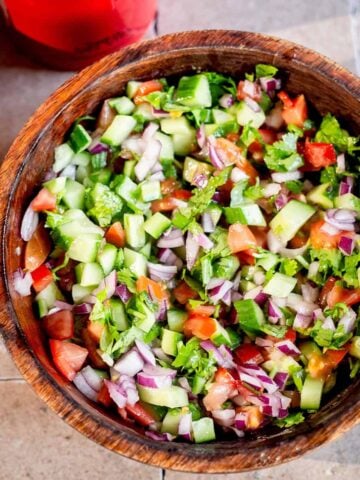
- Falafel and a fresh chopped salad like Fattoush
- Grilled chicken or lamb kebabs
- Muhammara and baba ganoush
- Olives and pickles
- Warm flatbreads
It can also be served on its own as a generous breakfast or brunch dish.
Storage and Make Ahead
Pitta - Toast the pitta up to a day ahead. Once completely cool, store in an airtight container at room temperature.
Yoghurt mixture - Prepare the chickpea and yoghurt mixture ahead and refrigerate in an airtight container for up to 2 days. Stir before using. You may need to loosen it with a little water.
Toppings - Toast the nuts ahead and store separately.
Assembled fattet hummus - This is best eaten immediately. Once assembled, the pitta will continue to absorb the yoghurt mixture and lose its crispness.
Frequently Asked Questions
What does fattet hummus mean?
Fattet hummus is a Levantine dish made with layers of toasted or fried bread, chickpeas and a yoghurt-based sauce. The word fatteh refers to the preparation of breaking or tearing bread into pieces, which are then layered with other ingredients.
Is fattet hummus the same as regular hummus?
No. Regular hummus is a smooth chickpea and tahini dip. Fattet hummus is a layered dish made with pitta, chickpeas and a yoghurt and tahini sauce. It is generally served as a meal or sharing dish rather than a dip.
Can I use Greek yoghurt?
Yes. Greek yoghurt works well, but it is considerably thicker than regular plain yoghurt. Add warm chickpea liquid a little at a time until the sauce has a pourable consistency.
Can I make fattet hummus without tahini?
No. Although you can leave out the tahini, the flavour will be less nutty and rich.
Can I fry the pitta instead of baking it?
Absolutely. Fry the pitta squares in oil until crisp and golden, then drain on kitchen paper. Allow them to cool slightly before assembling.
Is fattet hummus served hot or cold?
It is generally served warm or at room temperature. The chickpeas are warmed, while the yoghurt mixture can be cool or at room temperature. The combination works particularly well.
Can I make fattet hummus ahead of time?
You can prepare the individual components ahead, but assemble everything just before serving. This keeps the pitta from becoming too soggy.
More Middle Eastern Favourites:


Did you make this recipe?
Rate and Leave a comment
i'd love to hear about it! did you try any variations? if you loved this recipe/tried any variations/have some top tips, please leave a star rating and comment below. Your reviews make our day and your tips help others to find our recipes and enjoy them too!
you can also follow us on instagram and subscribe to our newsletter to get our latest recipes.
📖 Recipe
Fattet Hummus (Lebanese Chickpea and Yoghurt Fatteh)
Ingredients
Toasted Pitta Chips
- 3 thin pitta breads cut into small squares
- Olive oil for drizzling
- Pinch of salt
Hummus and Yoghurt Mixture
- 1 tin chickpeas 400g
- 3 tablespoon tahini
- 370 g plain yoghurt
- 1 teaspoon ground cumin
- 2 garlic cloves crushed
- 1 green chilli finely chopped (optional)
- 1 lemon juiced
- Salt and black pepper to taste
Garnish
- 2-3 tablespoon ghee or olive oil
- 2½ tablespoon pine nuts or flaked almonds
- 2-4 tablespoon pomegranate seeds
- Paprika or Aleppo pepper for garnish
- Fresh parsley chopped (optional)
Instructions
Toast the pitta
- Preheat the oven to 180°C (160°C fan).
- Cut the pitta breads into small squares and spread them across a baking tray. Drizzle with olive oil, add a pinch of salt and toss until lightly coated.
- Arrange in a single layer and bake for 5-8 minutes, turning once if needed, until crisp and lightly golden. Keep an eye on them as thin pitta can brown quickly. Set aside.
Warm the chickpeas
- Tip the entire tin of chickpeas, including its liquid, into a small saucepan.
- Bring to a gentle simmer and cook for a few minutes until the chickpeas are heated through.
- Remove approximately ½ cup of whole chickpeas along with a little of their cooking liquid. Set these aside for the final assembly.
- Drain the remaining chickpeas, reserving some of the warm liquid.
Make the hummus
- Transfer the remaining warm chickpeas to a food processor.
- Add the tahini, lemon juice, crushed garlic, cumin, green chilli (if using), salt and black pepper.
- Blend until smooth, adding a splash of the reserved chickpea liquid to help everything come together. Scrape down the sides as needed.
Add the yoghurt
- Add the plain yoghurt to the food processor and blend again until smooth.
- Taste and adjust the seasoning with extra lemon juice, salt or pepper.
- The mixture should be noticeably looser than traditional hummus. It needs to be creamy and pourable rather than thick, so that it can coat the pitta and settle between the layers.
- If it is too thick, gradually blend in a little more warm chickpea liquid until you reach the right consistency.
Toast the nuts
- Heat the ghee or olive oil in a small frying pan over medium-low heat.
- Add the pine nuts or flaked almonds and stir frequently until lightly golden.
- This only takes a couple of minutes, so keep an eye on them. Nuts can go from golden to burnt very quickly. Remove from the heat and set aside.
Assemble the fattet hummus
- Arrange the toasted pitta pieces across the base of a large, shallow serving platter.
- Pour the chickpea and yoghurt mixture evenly over the top, making sure the pitta is well covered.
- Scatter over the reserved whole chickpeas and spoon over a little of their cooking liquid.
- Finish with the toasted nuts and their ghee or oil, followed by pomegranate seeds, fresh parsley and a sprinkling of paprika/Aleppo pepper.
- Serve straight away while the chickpeas are warm and the pitta still has a little crunch.
Notes
Tips for the Best Fattet Hummus
- Keep the pitta crisp until serving - Assemble the dish just before you plan to eat. Leaving the pitta underneath the sauce for too long will make it very soft.
- Don't make the sauce too thick - The yoghurt mixture needs to be loose enough to coat the pitta. Add warm chickpea liquid gradually until you get the right consistency.
- Use warm chickpeas - Warming the chickpeas before blending makes them easier to process and gives the dish a lovely temperature contrast.
- Toast the nuts carefully - Pine nuts are delicate and burn quickly. Use medium-low heat and keep stirring.
- Taste before assembling - The yoghurt mixture should be well seasoned, with enough lemon and garlic to balance the tahini.
Variations
- Add more chilli - Alongside the green chilli in the yoghurt mixture, sprinkle over extra Aleppo pepper or chilli flakes.
- Use different nuts - Pine nuts are a popular choice, but flaked almonds or chopped walnuts work well too.
- Make it with Greek yoghurt - Greek yoghurt gives you a richer sauce. Loosen it with extra warm chickpea liquid until it is pourable.
- Fry the pitta - Instead of baking the pitta, cut it into squares and fry until golden and crisp. Drain well before using.
- Sprinkle Sumac on the pitta - A sprinkling of Sumac adds a bright, tangy, slightly citrusy flavour with a gentle sharpness. It cuts through the richness of the yoghurt, tahini and olive oil in fattet hummus, balancing the creamy layers and adding a little freshness.
What to Serve with Fattet Hummus
Fattet hummus is lovely served as part of a larger Middle Eastern spread. Try serving it alongside:- Falafel and a fresh chopped salad like Fattoush
- Grilled chicken or lamb kebabs
- Muhammara and baba ganoush
- Olives and pickles
- Warm flatbreads

Leave a Reply